Tiny Wedding Dresses: 3 Gowns and a Heartbreaking Secret
Some family secrets stay buried for decades, until one small delivery brings them back to life. For one family, that delivery was a box of tiny wedding dresses, left at a hospital the morning after a long-awaited birth.
The tiny wedding dresses looked like a strange gift, but they turned out to be a message from the past. They exposed a 30-year lie, a lost young mother, and three sisters who never knew each other.
A Long-Awaited Arrival
Emily and her family had waited seven years for a baby. When she finally gave birth to three healthy girls, the joy in the hospital room was hard to put into words.
Her mother stayed close by, helping with every small need. Everyone believed the hard part was over and that only happy days lay ahead.
Nobody imagined that tiny wedding dresses would arrive the next morning and change everything.
The Mystery of the Tiny Wedding Dresses
A nurse walked in carrying a large white box. She explained that someone had left it at the front desk for the family, but there was no sender’s name anywhere.
Inside were three tiny wedding dresses, each one small enough for a newborn. They had lace sleeves, pearl buttons, and soft little veils, and they looked carefully handmade.
Emily was confused and uneasy. Who would send bridal gowns to babies who were barely a day old?
At the bottom of the box sat a card. It read: “Three brides. Just as we agreed.”
Nobody in the family had agreed to anything. The words felt less like a greeting and more like a warning.
A Great-Grandmother’s Collapse
About an hour later, Margaret arrived. She was 79, the mother of Emily’s father, David, and she had come to meet her great-granddaughters for the first time.
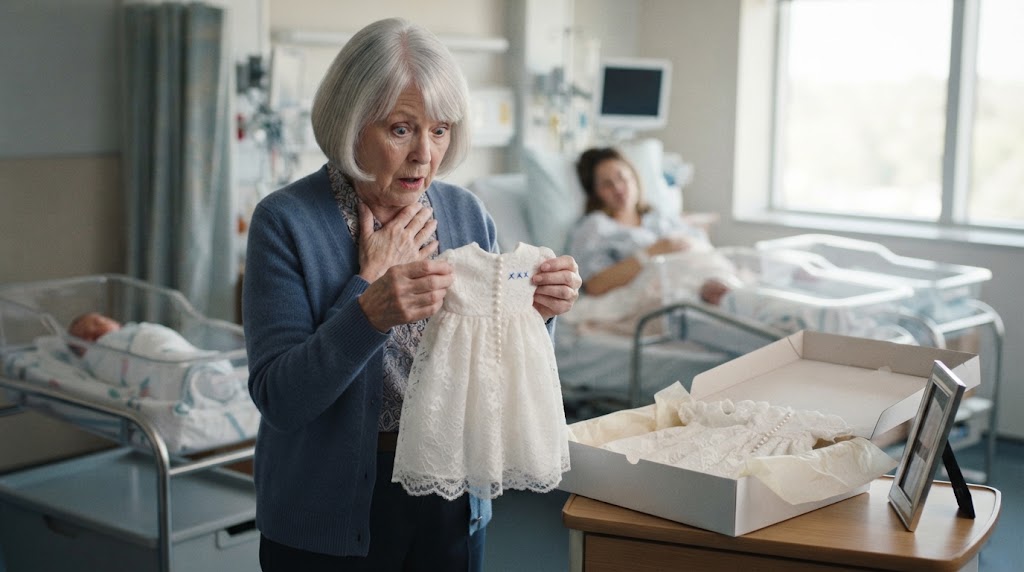
She was smiling as she walked in. Then she noticed the tiny wedding dresses on the table, and the color drained from her face.
She lifted one gown and turned it over. Hidden under the collar were three small blue stitches.
Her hands began to shake as she checked the other two dresses. She asked who had brought them, and before anyone could answer, she collapsed.
Nurses rushed in, and Margaret came around within a few minutes. The first thing she did was grab her daughter-in-law’s wrist and beg her not to let Emily dress the babies in those gowns.
A Phone Call That Changed Everything
Before Margaret could explain, her daughter-in-law’s phone rang. The number was unknown.
For a few seconds, there was only silence. Then a man spoke quietly, telling her to ask Margaret what happened to her daughter, Laura, and not to believe her if she claimed Laura died without children.
The call ended as suddenly as it began.
Laura was a name that had come up only a handful of times in 26 years of marriage. Margaret’s only daughter had reportedly died in a car accident at 24, long before David’s wife joined the family.
Whenever David mentioned his sister, Margaret grew quiet and distant. Over time, the family simply stopped asking.
Now a stranger was saying Laura had been a mother. With the tiny wedding dresses still sitting nearby, it was clear this was no prank.
When told about the call, Margaret pleaded for silence. Emily had just given birth, she said, and this was not the time.
David arrived soon after, and under pressure, Margaret admitted one thing. The three blue stitches were Laura’s signature, placed on everything she sewed, always in the same spot.
Before David took his mother home, Margaret left one strange line behind. Whatever they heard, she said, they should remember she had only been trying to protect her family.
The Clue in an Old Photograph
That night, after Emily and the babies were settled at home, her mother pulled out the old family albums. She was looking for anything that might explain Margaret’s fear.
She found Laura in a garden photo taken at Margaret’s former home. Laura had dark hair, a wide smile, and a white dress with lace at the collar.
Under that collar were three tiny blue stitches. The tiny wedding dresses had clearly come from someone who knew Laura’s work well.
Laura’s Hidden Story
The next morning, Margaret sat at her kitchen table with a cup of tea she never touched. When she saw the photograph, she finally began to talk.
Laura had become pregnant at 23. The father was a married man who refused to take responsibility, and Margaret, afraid of a scandal, urged her daughter to keep it quiet.
When Laura learned she was carrying triplets, she was terrified. She had no money and no support from the father, so Margaret convinced her that adoption would give the girls a better life.
Laura signed the papers, and the three babies went to different families. Almost at once, she regretted it.
For months, she wrote letters and made phone calls trying to find her daughters. She begged her mother for help, but Margaret refused, believing it would wreck the life Laura was trying to rebuild.
Six months after the birth, Laura died in a car accident on a wet road while driving home from a friend’s house. The family was told she had died without children.
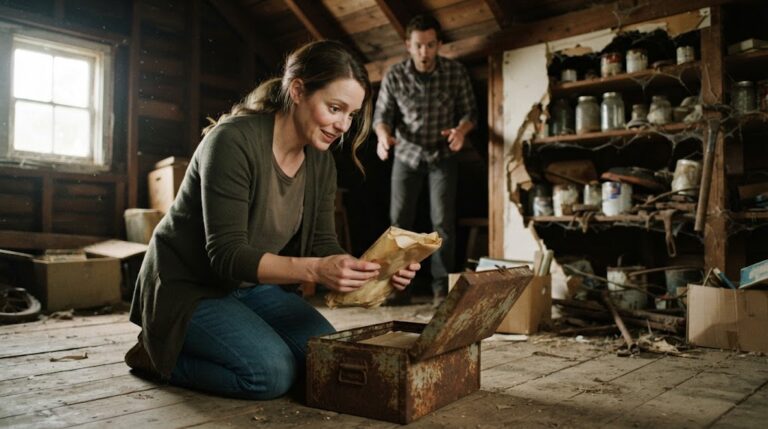
Margaret had kept Laura’s letters all those years. She brought out an old wooden box holding letters, hospital papers, and a photo of three newborn girls lying side by side.
On the back of that photo, Laura had written that these were her three little brides, and that she hoped they would one day find each other. The card in the hospital box had borrowed her words.
Each baby in the old photo wore a little white dress. The tiny wedding dresses from the hospital were not exact copies, but someone had clearly recreated them.
Margaret admitted she had once promised to help Laura find the girls. After Laura’s death, she could not face it, so she told herself the children were better off not knowing.
Why Someone Sent the Tiny Wedding Dresses
That afternoon, the caller phoned again. This time he gave his name: Michael.
Michael explained that his wife, Sarah, had been adopted as a baby. She had spent years searching for her birth family and her sisters, and her search led her to Laura and to Margaret.
Laura had left copies of her letters with the adoption agency. She asked that they be given to her daughters if they ever came looking.
In those letters, she called the girls her three little brides. She hoped they would find each other, and one day marry and raise families of their own if they chose.
Sarah also learned about the blue stitches from the baby dresses Laura had given the agency, including the one Sarah wore when she was adopted. That detail is what made the tiny wedding dresses so unmistakable.
Then Michael saw a Facebook post announcing the triplets. Knowing Margaret was the great-grandmother, he decided this was the moment for her to face what she had done.
He was clear about his reasons. He did not want money or revenge, only for Margaret to tell the truth his wife had spent her life chasing.
He also shared that he had found a second sister, Rebecca, who lived a few hours away. The third sister was still hard to trace.
Seen this way, the tiny wedding dresses were never a threat against the newborns. They were a message to a woman who had pretended for 30 years that three children never existed.
A Mother Confronted by Her Own Son
That evening, David and his wife sat with Margaret in her living room, Laura’s letters and photograph spread across the coffee table. For the first time since the tiny wedding dresses arrived, Margaret had nowhere left to hide.
She confessed that years earlier, the family who adopted the first baby had written to her asking about Laura. She never replied.
David was hurt and angry. He told his mother she had made a choice for three children and then hidden it from everyone.
Margaret did not argue. She admitted she had been ashamed, and that in trying to protect Laura, she had lost her anyway.
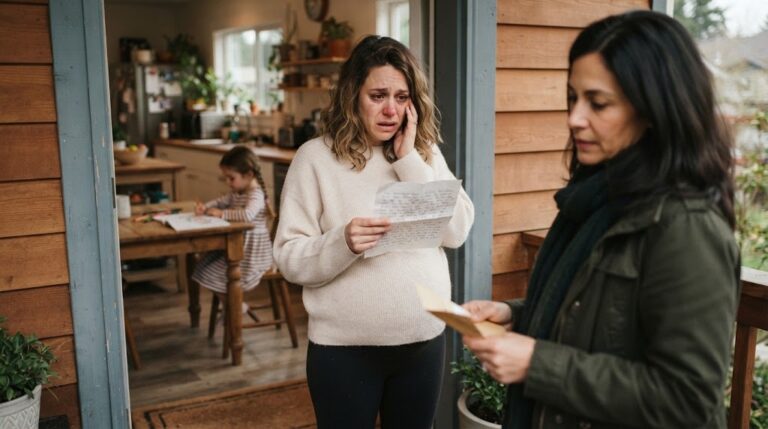
She then revealed one last secret. Laura had written a final letter two weeks before the accident, saying she had decided to search for her daughters herself.
Margaret had hidden that letter, too, out of fear the girls would hate her. In it, Laura said she hoped her girls would find each other and know she never stopped loving them or thinking about them.
After a long silence, Margaret said she wanted to meet them. David’s reply was simple: she should have wanted that 30 years ago.
Three Sisters, One Lost Mother
Rebecca arrived three days later. She was about 30, with Laura’s dark hair and the same smile from the old photograph.
Margaret opened the door herself and told Rebecca she looked like her mother. Rebecca’s eyes filled with tears, because she only knew Laura through a few photos.
Rebecca explained that she had come because Sarah wanted her to find their third sister. Sarah, she said, was not yet ready to face Margaret.
The two women spent hours going through photographs, letters, and Laura’s old sewing patterns. Before leaving, Rebecca agreed to help with the search.
It took several weeks. With help from the adoption agency and the records Sarah had gathered, they found the third sister, Helen.
Helen had grown up in a loving family and had no idea she had biological sisters. When Rebecca called, Helen was silent for nearly a minute before asking if it was really true.
After seeing the records and hearing about the tiny wedding dresses that started it all, Helen agreed to meet. Sarah came, too.
The first meeting was awkward and emotional. The sisters compared childhood memories, laughed at their differences, and cried over the lost years.
None of them had become the person Laura might have raised. Still, each carried pieces of her in their faces, their gestures, and the stories they had inherited.
Margaret sat at the edge of the room until Rebecca invited her to join them. It was not forgiveness, but it was a start.
What the Tiny Wedding Dresses Mean Now
Emily heard the whole story from her mother without interrupting. Then she picked up one of the tiny wedding dresses and studied the blue stitches.
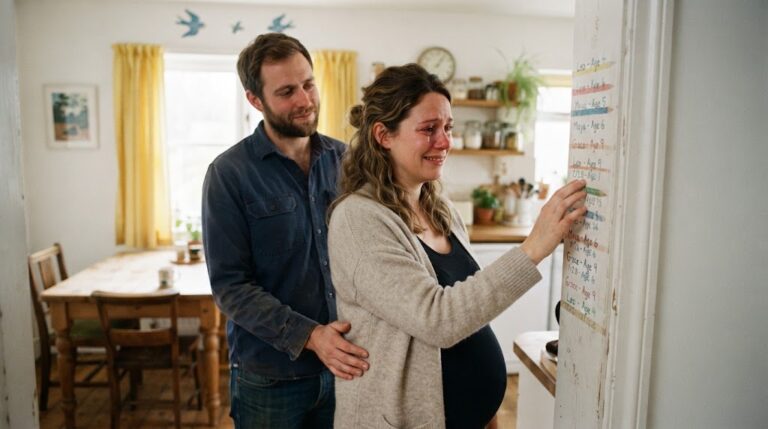
Looking at her own daughters asleep side by side, she understood. She could not imagine being separated from them or never knowing if they were safe.
The next day, Emily invited Margaret over. Margaret came with a small album of Laura’s photos and sat quietly beside the babies.
She apologized, saying she could not undo the past but could tell the truth now. Emily took her hand and said she hoped Margaret finally understood what her choice had cost.
Margaret said she did. For the first time, she spent an hour talking about Laura openly, without changing the subject.
Before leaving, she asked if Emily would keep the tiny wedding dresses. Emily said yes, but not as wedding gowns and not as a promise that her girls would marry someday.
Instead, the tiny wedding dresses would stay in the family as a reminder of a young mother who loved three children she never got to raise.
Lessons From a Family Secret
Margaret believed hiding the truth would protect the people she loved. In the end, the lie outlived the daughter it was meant to protect.
Stories like this show how deeply adoption secrets can shape families across generations. Adoptees exploring their search options can find reliable guidance through the Child Welfare Information Gateway, a U.S. government resource.
Hidden pasts and hard choices often ripple through families for years. You can read more real-life stories about families, relationships, and healing at Divorce Matters Today.
The tiny wedding dresses arrived as a warning, but they became proof that the past cannot stay buried just because people are afraid to speak.
As Emily held her three daughters, the saddest truth behind the tiny wedding dresses became clear. Laura never really wanted her girls to be brides. She wanted them to be sisters.