Adult Adoption Story: 5 Kids and 1 Heartbreaking Secret
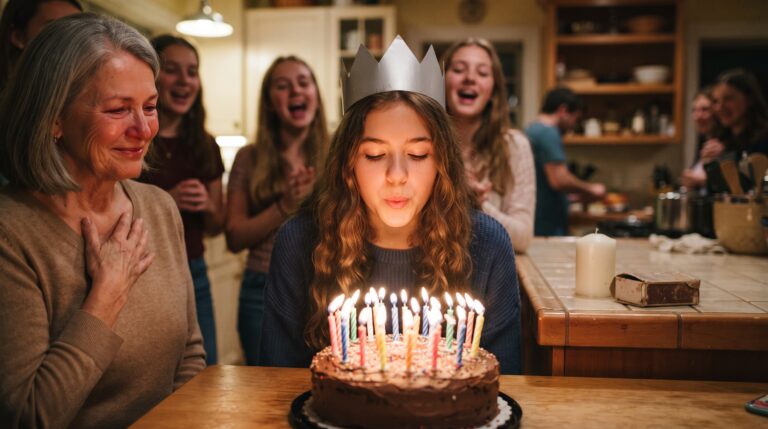
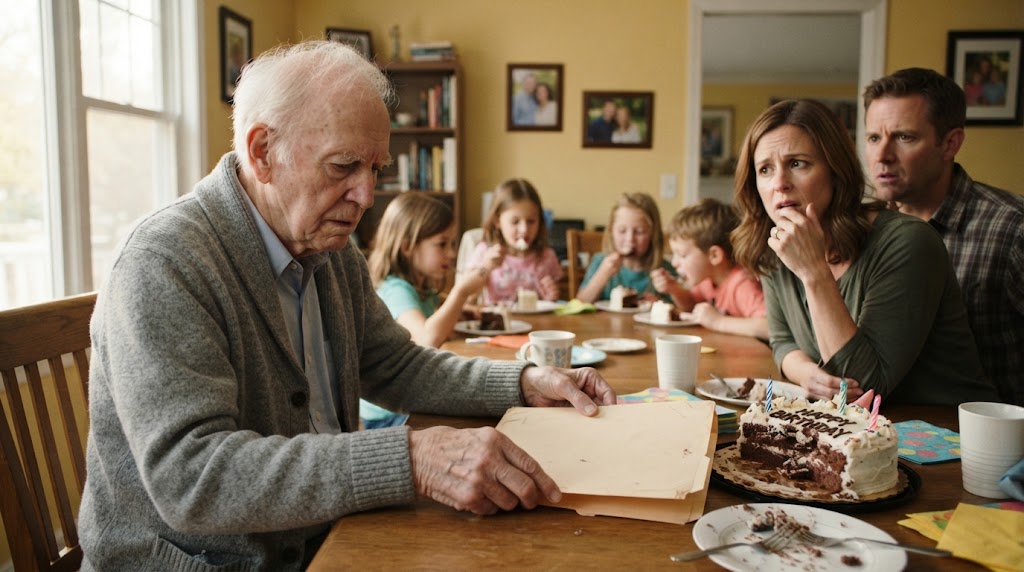
Abby and her husband thought an adult adoption would be the happiest birthday gift they could give the 88-year-old man their five children called Grandpa. They slid a folder across the dining room table while the kids were still eating his cake. Walter opened it, read the first page, and turned pale.
He did not look touched, or even surprised. He looked afraid, and he set the folder down as gently as if it might break. Then he asked whether the children could finish their cake in another room, because there was something he should have said a long time ago.
The Neighbor Who Became Grandpa
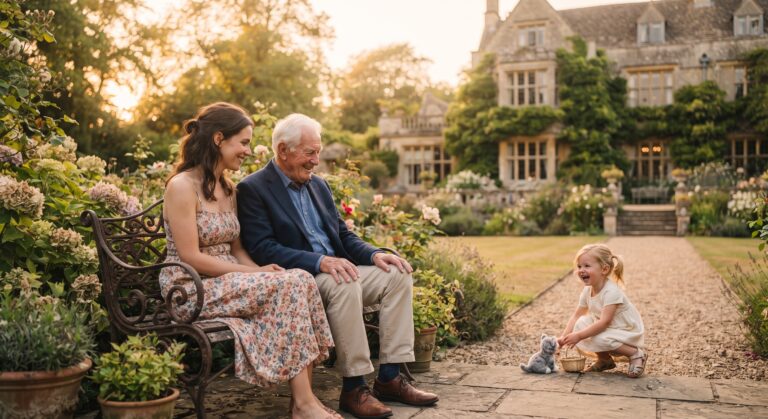
Walter had moved into the small house next door two years earlier. He was 86 then, newly widowed after sharing a home with his wife for 41 years, and he once admitted that the quiet in his new place felt even heavier than the quiet in the home he had left.
Quiet was never a problem on Abby’s side of the fence. With five kids, there was always a missing shoe, a shout from upstairs, something sticky on the counter, and a grocery bill that made her wince.
Walter began drifting over whenever the children played outside. Before long he was pitching balls, fixing a loose bicycle chain, and drinking coffee at the kitchen table.
Dinner invitations eventually stopped, simply because an invitation suggested he might not come. The kids started calling him Grandpa without anyone suggesting it. Long before anyone mentioned adult adoption, he already had his own chair.
Why the Family Chose Adult Adoption
That spring, Walter got sick. It was not serious, but Abby spent hours in a hospital waiting area being asked how she was related to him.
She had no good answer. She was not his daughter, and in the eyes of the law she was nothing to him at all.
So she and her husband began reading about adult adoption, the legal process that lets one adult formally become the child of another. It seemed like a simple way to put on paper what had already happened in their kitchen.
They chose his 88th birthday to ask. The plan was cake, candles, and a folder of adult adoption forms that said, in legal language, that he belonged with them.
The Confession at the Dining Room Table
Once the children were out of the room, Walter told them he could not sign any adult adoption papers until they knew why he had come to their street. He had not ended up next door by chance. He had known who lived there before he bought the house.
Abby laughed, one short sound, sure she had misheard. Her husband reached for her hand, and she pulled it back, needing both hands free.
Walter explained that after his wife, Margaret, died, he had taken an ancestry test. He did not care about percentages or heritage charts. He was searching for one person: his granddaughter, a girl named Abby.
His daughter, Kate, had given birth at 19 and placed the baby for adoption. Kate, he said, was Abby’s mother. The adult adoption paperwork on the table was asking him to join a family he already belonged to by blood.
Abby stood so fast her chair scraped the floor. She told him he did not get to just say something like that. Then she told him to show her.
A Match Waiting in an Old Account
Years before, Abby had taken an ancestry test of her own. She checked it constantly at first, but only distant relatives appeared, and eventually she stopped logging in.
That night it took three tries and a password reset to get into the account. Unread notifications were waiting. Among them was a close-family match with Walter’s name on it.
He admitted he had received his result two years earlier, before he moved, before he ever spoke to her. Every memory from those two years shifted at once: the first wave over the fence, the first cup of coffee, the first time her youngest called him Grandpa.
He had known the whole time. The man they wanted to welcome through adult adoption had been sitting at her table with the answer to the biggest question of her life.
The Childhood Nobody Knew About
There was one question that mattered more to Abby than the rest. She asked where he had been when she was eight and being moved again, carrying her things in trash bags. She asked where Kate had been.
Abby had been placed with a family as a baby, but the placement did not last. After that came foster homes, some decent and some not, none of them permanent.
Walter said they never knew. Kate became pregnant at 19, and Abby’s biological father vanished before the birth and was never heard from again.
Walter and Margaret had pleaded with their daughter to reconsider. They offered to help raise the baby, and even to raise her themselves. Kate believed that a couple who were ready for a child could give her daughter more than any of them could.
So she chose adoption, picturing two parents, a home, and stability. The family believed the baby had gone home with people who would keep her. Decades later, an adult adoption folder would bring that old decision back to the same family’s table.
What the Family Did to Find Her
Abby asked whether Kate had ever looked for her. Walter said yes, more than once.
The adoption had been closed. They did not know what name the baby had been given or where the family lived. Kate tried when Abby was older, and Margaret tried again later, with phone calls, letters, and every lead they could find. None of it went anywhere.
Then Abby asked where Kate was now. Walter looked down and told her that Kate had died nine years ago.
For more than 40 years, Abby’s mother had been an idea, someone who might be alive or gone, thinking of her or not. Now she had a name, and she was already lost. No adult adoption form could have prepared Abby for that sentence.
She asked whether she was really expected to believe Kate had searched. Walter said no. He expected her to ask for proof, and he had some at his house.
The Box in Walter’s House
Abby went next door alone with him. She had been in that house hundreds of times, and it suddenly felt unfamiliar.
Walter came out of his bedroom with a faded cardboard box. Inside were papers, old photographs, envelopes, and a tiny hospital bracelet.
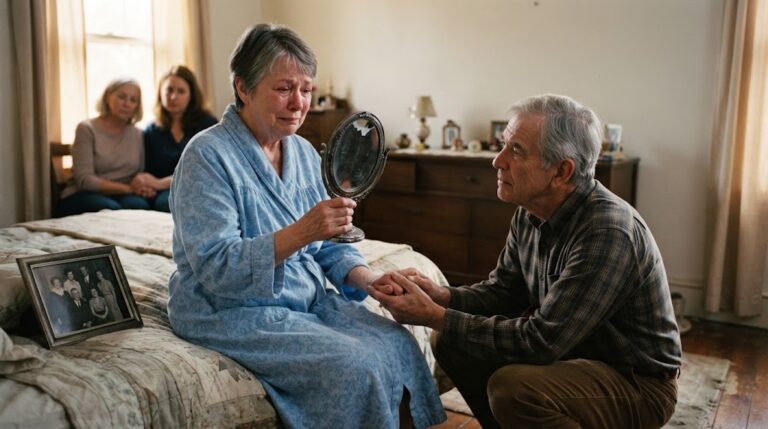
The first photograph showed a young woman holding a newborn. Abby recognized her own chin before Walter said a word.
Then came the letters, some addressed only to “My daughter.” Kate could not send them, so for a while she wrote them anyway.
One was written when Abby was six. Kate wondered whether her little girl liked books, what color her bedroom was, and whether she had a night-light. She hoped birthdays were a big deal, and above all that someone was always waiting when she came home.
By six, Abby had already left the home that was meant to be permanent. Kate had imagined her safe. That did not undo the choice, but for the first time, being given up and being unwanted stopped meaning the same thing.
Walter also showed her pages in Margaret’s handwriting: names, dates, phone numbers, crossed-out addresses, notes beside dead ends. After Kate died, Margaret kept insisting someone had to find the girl. Then she became ill, and after she died, Walter finally took the test. A search that started decades before any talk of adult adoption had ended at a backyard fence.
Why He Stayed Silent for 2 Years
Abby wanted to know why he had moved in next door instead of calling, writing, or knocking on her door. Walter did not defend himself. He said he had rehearsed what he would say before he moved.
Then he met her. In that first week, while she pulled weeds by the fence, she mentioned growing up in foster homes and wanting her kids to have one home they could always return to.
He went home realizing that everything his family had believed was wrong. He did not know how to tell her he belonged to the people who had lost her.
He promised himself he would speak the next day. Then the kids started coming over, then came coffee, then dinner, then the word Grandpa. He was terrified of losing all of them.
Abby told him that she had spent her childhood wondering why nobody came, and that he had found her and then let her go two more years without knowing. Walter agreed. Finding her late had not been his choice, he said, but staying quiet once he had was.
He called himself a coward and offered no excuse. He had meant to tell her after his illness, and still had not, until the adult adoption papers asked him to become family while he was hiding that he already was.
Anger, Letters, and a Porch Conversation
Abby carried the box home. She did not forgive him that night, and she did not ask him to leave. The adult adoption folder stayed where he had left it.
For several days she read. Kate wrote about ordinary things: songs she heard, jobs she hated, birthdays spent wondering what kind of cake her daughter liked.
The letters could not return what Abby had missed. They gave her something else, proof that she had lived in someone’s thoughts all along.
On the fourth evening she found Walter alone on his porch and sat beside him. She said she would have wanted to meet Kate, that she was angry she never could, and that she was still angry at him. He told her she should be.
Then she said she was glad he had found her. Walter covered his face and, for the first time, cried.
What Adult Adoption Meant After the Truth
They told the children the next day. After about four seconds of stunned silence, the eight-year-old declared that he had been right to say Grandpa all along.
His father pointed out that Walter was technically their great-grandpa. Walter groaned and said that at 88 there was no need to exaggerate, which the kids found hilarious.
Later, Abby found the folder exactly where he had left it on his birthday. She carried it into the kitchen, where Walter was helping her youngest with homework, and he went quiet when he saw it.
She told him they would figure out whether the adult adoption paperwork still made sense. It just was not the important part anymore. Then she put the folder away.
That evening Walter hovered beside the chair he had used for two years, unsure whether it was still his. Abby set a plate in front of it and told Grandpa to sit down before dinner got cold. He looked at her, at the chair, and at five children arguing over the last dinner roll, and he sat.
Lessons From One Family’s Adult Adoption Story
For most of her life, Abby believed there were only two possibilities: someone kept you, or they did not want you. The letters did not make her childhood hurt less, and shared blood did not excuse two years of silence.
What changed was the story she told herself. She had not been forgotten. She had been lost, and her family had spent years searching without reaching her.
The episode also shows why people consider adult adoption in the first place. A hospital desk asks a simple question about who you are to someone, and love alone does not always count as an answer.
Honesty matters just as much as any adult adoption paperwork. Walter’s fear cost Abby two more years of not knowing, and he was the first to say so.
Families who are searching for relatives separated by adoption, or weighing an adult adoption of their own, can find general adoption and search information through the Child Welfare Information Gateway, a service of the U.S. Department of Health and Human Services.
For more stories about family, loss, and second chances, visit Divorce Matters Today.
In the end, the adult adoption folder mattered less than the truth it forced into the open. The house was loud that night, nobody was bored, and for the first time everyone at the table knew exactly why Walter was there.