
Elderly Neighbor Gets an Inspiring Gift From a 12-Year-Old
Some friendships don’t care about age. For 12-year-old Owen, the best friend on his street was an elderly neighbor named Mrs. Parker, a retired teacher who lived two doors down and treated his wildest ideas like real science.
What started as after-school visits to her garden turned into a Halloween surprise that brought her back to the school she had loved for decades. It also forced one family to learn the difference between offering help and actually carrying it.
A Boy, a Garden, and an Elderly Neighbor Who Listened
Owen often came home with muddy knees and a new debate to report. One week, the question was whether marigolds really keep bugs away. Mrs. Parker didn’t think so, so the two of them decided to test it.
That was the thing about her. She never spoke to Owen like he was small. When he pitched a pumpkin that could play music, her first question was about the wiring.
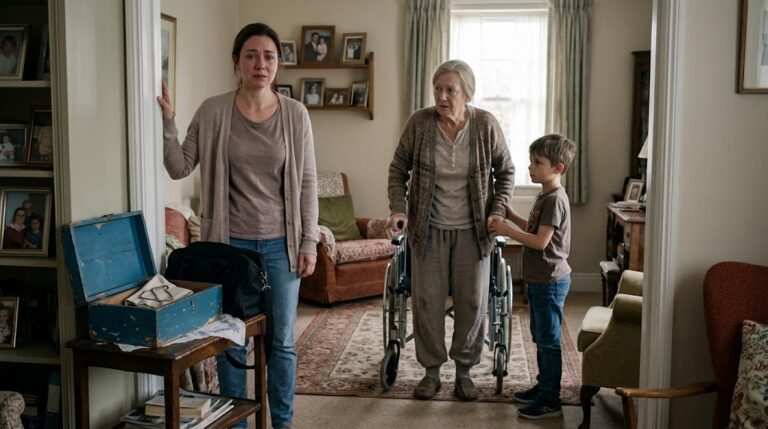
By fall, his visits had become a habit. His mother noticed that their elderly neighbor now held her porch rail more tightly than before, placing each step with care.
Her daughter, Beth, lived three hours away but made the drive almost every weekend. She arrived with groceries and left with laundry, a quiet routine that said a lot about how much she was carrying.
The Halloween Concert Surprise
On the night of the school’s Halloween concert, Owen kept asking whether Mrs. Parker would sit close to the stage. She came in a purple sweater and smiled at the paper bats hanging on the walls.
It was the first time their elderly neighbor had been back inside the building since she retired. She had taught there for more than 30 years.
When the final song ended, the music teacher passed Owen the microphone. He invited Mrs. Parker to come up on stage, and she looked genuinely unsure that he meant her.
A chair was waiting. Then the curtain opened, and a towering green-and-gold dragon spread its huge wings over the children. The whole audience gasped.
Owen had found her old drawings for a school play. He had worked with the music teacher, Mr. Alvarez, to bring her idea to life.
Then the dragon removed its head. Inside was a man in his thirties who had played Third Villager in her 2003 production. She had once praised his talent for dramatic death scenes. He now built theater costumes, and he and other former students wanted to help the children stage her show again.
Owen asked if she would help direct it. For a moment, the teacher in her lit up. She started explaining how the wings should open more slowly and where the entrance really belonged.
Then she stopped. She told him she couldn’t, because she was moving. A few rows back, Beth wiped away tears.
Why Their Elderly Neighbor Was Moving Away
Later, Beth explained the situation privately. Her mother needed dependable help, and every emergency meant hours on the road. She had recently lost a full day of work to one of those trips.
Mrs. Parker agreed, even though it hurt. She wanted to stay near her garden and the people she knew, but she admitted she couldn’t manage alone anymore.
Owen’s mother thought about all the former pupils who had filled the stage that night. She suggested the community could step in and keep their elderly neighbor at home. Beth said they could look into it, as long as it was safe.
Then, with Owen watching, his mother made a promise she wasn’t yet equipped to keep. She said they would find a way for Mrs. Parker to stay. Beth said nothing, and Mrs. Parker picked up Owen’s program and began sketching a better dragon entrance.
Good Intentions Meet Real Life
An initial assessment allowed their elderly neighbor to try support at home. Rails went up, everyday items were moved within easy reach, and a morning aide was hired for personal care. Neighbors volunteered meals and rides.
Beth kept the assisted-living place on hold. She also asked hard questions. Who would cover a shift when someone canceled? Which names on the schedule had actually committed to their hours?
The honest answer meant more phone calls. Meanwhile, Beth quietly loosened jar lids before putting them away and poured milk into a lighter jug. Then she kissed her mother and rushed off for the long drive home.
At home, the strain was showing too. Owen’s father, Marcus, was picking up school runs his wife usually handled. One night he ate a reheated dinner while she answered messages about groceries.
Still, there were bright moments. Mrs. Parker began attending rehearsals, sitting while other adults moved props. When she reworked the shepherd’s entrance, a sluggish scene suddenly came alive, and Owen ran over beaming.
The Fall That Changed Everything
Then the aide called. Their elderly neighbor had fallen in her kitchen while reaching for a pot. She got help right away and nothing was broken, but afterward she needed more support getting around.
A reassessment revealed the problem no schedule could solve. The only bathroom in the house was upstairs, and she could no longer manage those stairs safely without help.
Beth stayed to arrange the move and made her position clear. They had tried the community approach, and now her mother would live near her. More dinners and more volunteers, she pointed out, would never change the layout of the house.
Owen begged his mother to stop it. Mrs. Parker sat very upright, waiting. Instead of offering another plan, his mother sat beside her and apologized. She admitted she never should have promised something she didn’t fully understand, and that she wouldn’t push for an unsafe arrangement.
Owen turned away and stood silently at the window.
A Harder, More Honest Offer
The next morning, Owen’s mother asked Mrs. Parker what she feared losing most. The answer was simple: Owen’s visits, familiar faces, and the show. The house mattered too, but she was beginning to accept it might have to go.
That got his mother thinking about her own home. Her ground-floor workroom sat next to a downstairs bathroom with a step-free shower. She kept the idea to herself until she could talk to Marcus.
His first answer was a firm no. He reminded her that she used that room every day, and that he had already been covering pickups she forgot to mention. He wanted to help, but not by discovering what he had agreed to after the fact.
So they started there. That night, they mapped out what each of them could truly give. Her office would move to a cramped room upstairs. Marcus would keep his own commitments instead of absorbing hers, and she checked her available hours against her real workload.
Mrs. Parker’s care coordinator evaluated the downstairs room and bathroom. With paid assistance in place, her needs could be met without stairs. Her own care budget would cover that support, while household costs were worked out separately.
Marcus agreed to let their elderly neighbor stay temporarily, through the end of the production, as long as every arrangement was in place.
Letting the Elderly Neighbor Decide for Herself
Beth wasn’t convinced. She refused to give up her mother’s place for another experiment, and no one asked her to. She wanted to know whether Marcus truly agreed, and who would miss work when an aide called out.
Owen’s mother said she would cover any gap. If help wasn’t available, the family would change its plans rather than leave Mrs. Parker alone. Marcus showed Beth the schedule and was clear about which duties he had accepted and which he had not.
Then Beth shared something painful. Her mother had once told her she was managing meals, but Beth arrived to find the fridge nearly empty. How could anyone be sure they would hear what her mother was afraid to say?
Mrs. Parker admitted she had been embarrassed and promised not to hide things again. The family also promised Beth she would not become their automatic backup.
Then Mrs. Parker spoke up for herself. She thanked her daughter for keeping her going and acknowledged what it had cost her. But she pointed out that everyone kept deciding where she would live without asking her.
Beth slid the schedule across the table and asked her mother what she wanted. This time, she waited for the answer.
Mrs. Parker named her fears: becoming a burden, and facing a harder goodbye later. She asked Marcus to tell her if it ever became too much, and he promised honesty. She chose to stay until the show ended, with a review set for six weeks after her arrival.
When Owen heard the plan, he hugged his mom and asked if he could make a sign for her door.
Life Under One Roof
Moving day felt warm and a little awkward. Their elderly neighbor kept apologizing, and Owen’s mother encouraged her to use the drawers instead of living out of a bag. She checked that her door closed for privacy, and Owen learned to knock and wait.
The weeks that followed brought small adjustments, shared meals, and quiet time. Visits came from former students who still adored their elderly neighbor. Twice a week she helped at rehearsals, and on other days she and Owen debated the dragon’s wings.
Then, on the morning of the final rehearsal, the aide called in sick. A replacement couldn’t come until five. Owen’s mother had a client presentation at 11, and the client said they would use someone else if she didn’t show.
Mrs. Parker urged her to go, promising to sit still with her tea. But a promise not to need anything isn’t a safety plan. Remembering her word to Beth, Owen’s mother canceled and lost the job, along with money she had counted on.
When Owen came home and learned Mrs. Parker couldn’t attend rehearsal, he snapped and asked what the point of having her there was. He saw her face fall and instantly regretted it.
Mrs. Parker handed him her script and asked him to show Mr. Alvarez her notes on the shepherd’s entrance. Owen suggested a video call so she could watch. She directed the entire rehearsal from her armchair.
That night, Marcus didn’t pretend the lost fee was nothing. They went through the month’s expenses and found something to postpone. When Beth called and asked why no one had phoned her, the answer was simple: there was nothing for her to fix.
Opening Night and What Came After
On opening night, Owen carried the script for his elderly neighbor while an adult helped her to her seat. He ran back once to make sure she could see. She told him to go.
The dragon’s wings opened slowly, just as she had wanted. A little girl in a sheep costume froze, took a breath, and stepped onto the stage. Mrs. Parker squeezed the hand beside her, while Beth watched her mother as much as the children.
When the applause came, Beth told her mother the kids had listened to her. Mrs. Parker joked that it had taken them a while.
At the Sunday review, Mrs. Parker spoke first. She loved their mornings together but disliked feeling she needed permission to invite friends over. Marcus and his wife were honest about where they felt stretched, and they budgeted for covering canceled shifts.
With guidance from the care coordinator, everyone agreed to extend the stay by one month, with the same support and another review. Mrs. Parker chose it, Beth called it reasonable, and no one promised anything beyond that.
What This Story Teaches About Caring for an Elderly Neighbor
It’s easy to promise an elderly neighbor that you’ll find a way. Real help means counting hours, budgets, and stairs, and admitting when good intentions aren’t enough.
The story also shows that the person receiving care deserves a voice. Support works best when she helps shape the plan instead of being moved around by it.
If your family is facing similar choices, the National Institute on Aging offers practical caregiving guidance. For more real stories about family, relationships, and life’s hardest turns, visit Divorce Matters Today.
That evening, Owen asked if she would still visit him if she moved later. She promised she would and invited him to visit her too. Then she held out her hand for the green pencil, and Owen pulled his chair up beside his elderly neighbor.