Entitled Neighbor Story: A 76-Year-Old’s Powerful Stand
Ruth is 76, and for weeks she worked hard to keep the peace with the entitled neighbor who had just moved in next door. Then Thanksgiving arrived, and she realized something that changed everything. She was the only one who had been worried about keeping things friendly.
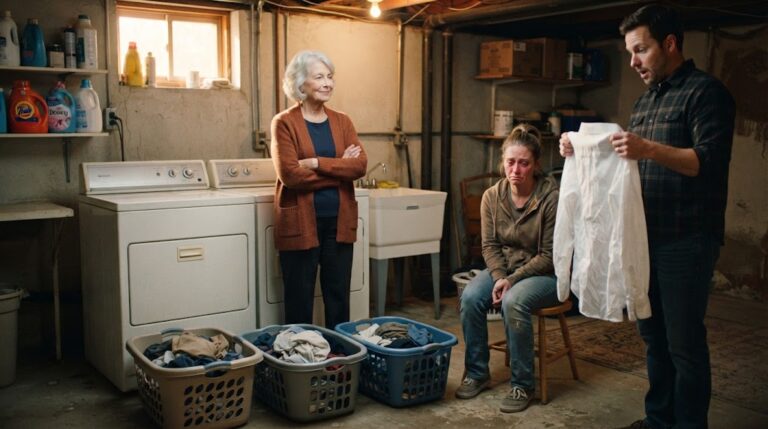
The moment of clarity came at noon. When Ruth carried the kitchen trash outside, she found her trash can twisted, with one side folded in on itself. Ashes and chunks of charcoal sat inside, and her potato peels and coffee grounds were scattered across the driveway.
She didn’t have to wonder for long. That morning, she had seen Denise and her holiday guests cooking on a small portable charcoal grill. Ruth knew exactly where those coals had come from, and she had a pretty good idea how the conversation at Denise’s door would go.
How the Entitled Neighbor First Moved In
Ruth and her husband, Frank, have lived in their home for a long time. So long, in fact, that she still calls the family who arrived nine years ago “the new neighbors.” Denise, the entitled neighbor in this story, was brand new.
The first time Ruth caught her in their garage, Denise was holding two of Ruth’s flowerpots, with the couple’s rake hooked over her elbow. When Ruth asked what she was doing, Denise brushed it off. She said she had just moved in, needed a lot of things, and would return them later.
Ruth let her entitled neighbor take them. It felt simpler than making a fuss, and she assumed they would see each other at the mailbox the next morning like ordinary neighbors.
A few days later, Ruth needed the rake. She walked over to ask for it, and Denise simply told her where she had left it and went back to what she was doing. Ruth found it leaning against Denise’s back steps and carried it home herself. She later admitted she almost thanked her entitled neighbor for the trouble.
A Pattern of Borrowing Without Asking
For this entitled neighbor, the rake was only the beginning. Next came the gardening tools, then the lawn mower. One Saturday, Ruth and Frank came home from the grocery store to find the mower gone.
Frank checked the driveway camera, and there was Denise, pushing it across the grass. The couple had taken Ruth’s car that day, leaving Frank’s parked in the garage. He saved the clip because the mower handle had come awfully close to his side mirror.
Ruth went over and asked for the mower back. The next time the two women crossed paths, they talked about the weather, as if nothing had happened.
After that, Ruth started closing the garage whenever they went out, a real change for a couple who had always left it open during the day. But a closed door could not protect the whole yard from an entitled neighbor.
One afternoon, Ruth found Denise’s hose screwed onto their outdoor faucet. It ran across both lawns and straight into Denise’s pool. Another day, she watched Denise cut three of her roses, explaining that she needed a sample so she could plant the same kind.
Why Ruth Kept Saying Yes
The hose bothered Frank even more than the mower. He wanted to go over and say something, but Ruth told him she would handle it.
Her version of handling it was quiet. She turned off the water, took the hose off the faucet, and left it coiled on Denise’s side of the yard. No confrontation, and not a single word to her entitled neighbor.
The roses were even harder to admit. Ruth had walked outside planning to tell Denise to put down the shears. Instead, she heard herself asking what color Denise wanted, as if she were offering free gardening advice.
This is a familiar trap for kind people who hate conflict. When someone keeps taking, it can feel easier to quietly absorb the cost than to risk an awkward moment. An entitled neighbor often counts on exactly that.
The Trash Cans Became the Breaking Point
The trash was the first thing Ruth asked her entitled neighbor outright to stop. Some mornings, her cans were already nearly full before she had added a single bag of her own. Then she caught Denise carrying two enormous black bags toward them.
By the time Ruth got down the driveway, the first bag was already in. She politely asked Denise to use her own cans. Denise replied that hers were always full while Ruth’s were practically empty, and wondered aloud how much trash two retirees could possibly have.
Ruth suggested she get some additional cans if she needed more room. Denise rolled her eyes, dropped in the second bag, and said she was not about to pay extra for them. She even called Ruth stingy for making a fuss over a couple of bags.
It kept happening. Once, the entitled neighbor even waved on her way back across the lawn. Ruth kept telling herself she had said it politely enough, and that surely she would not have to keep saying it.
One evening, Frank noticed her walking a bag of kitchen trash around the side of the house. Both cans out front were full again, so she was using the little can by the back door. She would rather make two trips than go next door and have the same conversation one more time.
A Thanksgiving Showdown With the Entitled Neighbor
Back to that ruined trash can and the entitled neighbor behind it. Ruth took the bag inside and asked Frank to come look. Once it was safe to move, she wheeled it next door, though only one wheel still turned properly. She had to tip it almost sideways to get it up the little step to Denise’s front walk.
She had barely gotten the can upright before asking Denise whether she had dumped hot coals into it. Denise took one look and waved it off. She said she had cleaned out the grill, thought the coals had already cooled, and told Ruth to just buy a new trash can.
Ruth gripped the handle with both hands. She was shaking. Behind Denise, guests were gathered around a folding table, and someone was reaching across it for a roll.
Ruth told her she had never had the right to use those cans in the first place and needed to replace this one at her own expense. The entitled neighbor refused flatly. She called Ruth a cheapskate, suggested she and Frank use some of their retirement money, and told her to stop ruining the holiday. Someone behind her laughed, and Denise shut the door while Ruth’s mouth was still open.
What bothered Ruth most afterward was not the entitled neighbor, but her own quiet confession. She had been about to offer to split the cost. Even after being mocked, she had been halfway to paying just so they could go back to waving at each other. She wheeled the can home without making the offer.
What the Camera Revealed
Ruth and Frank picked up the mess together. She washed her hands, put the potatoes on to boil, and opened the camera app on her phone.
She had started the clip too late, catching only Denise walking home with the grill. So she backed it up. Both cans were in view. Denise went to her own can first, opened the lid, and looked at the bags piled inside. Then she shut it, crossed the grass, and tipped the grill into Ruth’s can. She even closed Ruth’s lid afterward.
Ruth watched it twice. Maybe her entitled neighbor really did think the coals were cold. But she had checked her own can first, then gone straight to the one Ruth had asked her to leave alone. Ruth had been in the kitchen the whole time, and she would have heard a knock.
She saved the recording and found Frank’s old mower clip. Then she looked up the price of a can the same size. She could have ordered it and been done before the potatoes were ready. For a minute, the order page sat open on her screen.
A Serving Platter With a Surprise
The family came over, everyone ate, and the leftovers went home with them. While Frank was still trying to get a lid onto the leftover pie, Ruth reached for the big serving platter, one she had already washed once that day.
She dried the rim, placed what she had prepared on it, and covered it with the domed lid. Cars were still parked outside Denise’s house when Ruth walked over.
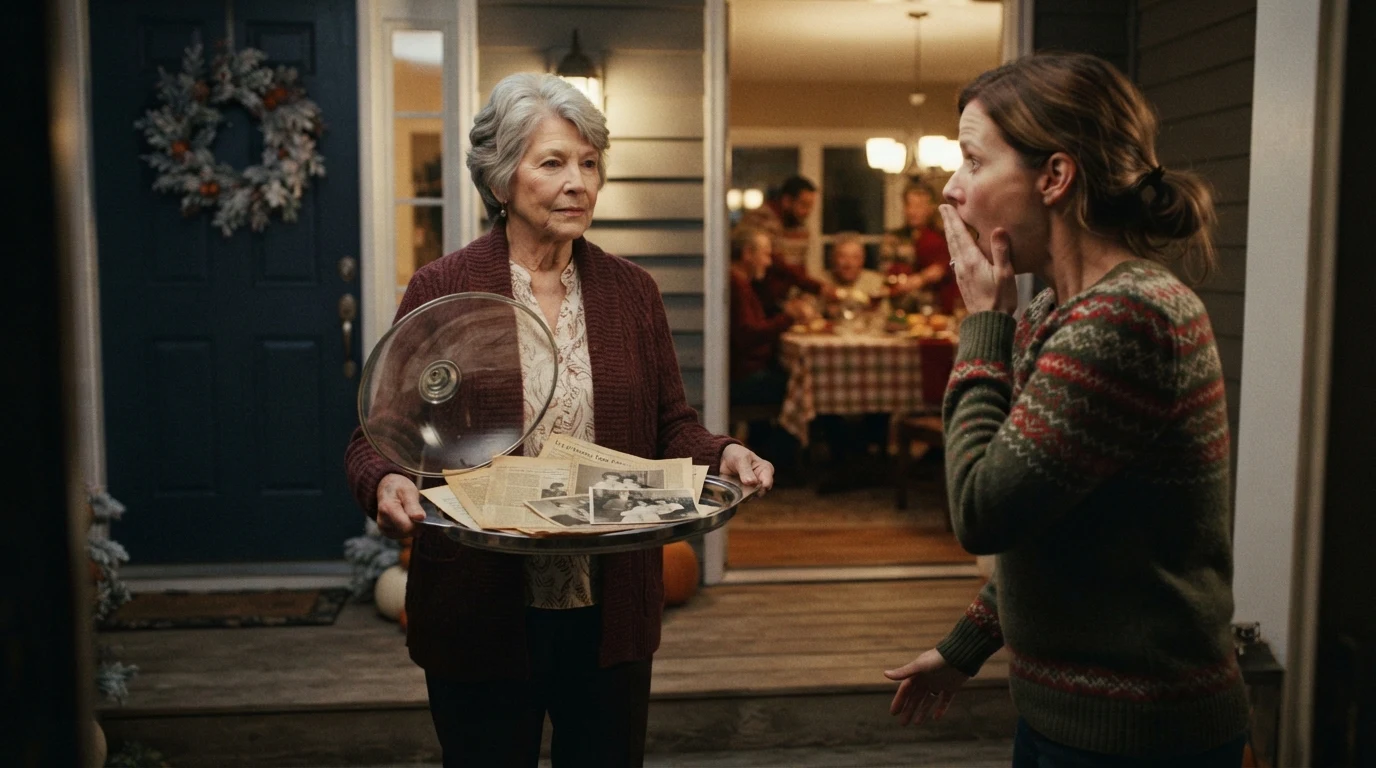
The entitled neighbor opened the door to a room full of guests talking over each other. Seeing the platter, she smiled and held out both hands. Then Ruth lifted the lid. Denise’s hands dropped, the color drained from her face, and she demanded that Ruth cancel it right now.
On the platter was a confirmation for a Monday morning call with their local community mediation center. Under it lay a letter Ruth had signed, listing the price of a replacement can, along with two printed photos. One showed Denise tipping the grill into Ruth’s can. The other showed her coming out of the garage with the mower.
That second photo mattered most to Ruth. They had once talked about when she could get her mower back, but never about what made the entitled neighbor think she could take it in the first place.
Denise picked up the mower photo by one corner, read the date across the top, and laid it face down. She asked what Ruth had told the center. Ruth explained that it was simply an online calendar, and she had picked a time.
Denise glanced past her toward Ruth’s house, then looked over her shoulder. When a guest asked if she needed a hand, she said no and pulled the door closer behind her. Lowering her voice, she offered to buy the can if Ruth would just call and cancel.
Standing Firm Without Raising Her Voice
At noon, Ruth admits, she would have thanked Denise for that offer. Knowing herself, she probably would have apologized for interrupting the holiday, too. Now the price of peace was simple: take the money and drop everything else.
Denise was already reaching for the papers. Ruth kept both hands on the platter and said, “I’ll take the call on Monday.” Then she held it out. For a second, she thought the door might shut in her face again. Instead, Denise picked up the papers, held them against her chest, and went inside.
Back home, Frank asked how it went. Ruth told him Denise had offered to buy the can. He asked whether she was still taking the call, and she said yes. It was a lot easier to say that in her own kitchen.
How Mediation Changed the Entitled Neighbor Dynamic
On Monday, Ruth spoke with a woman named Carol, who asked what she wanted to happen. Ruth started with the trash can and somehow ended up talking about the rake, and how Denise had pointed her toward it as if setting it out had been a favor.
Carol asked a simple question. The next time Ruth needed the rake, where did she want it to be? Ruth answered right away: in her garage, where she had put it.
The center called the entitled neighbor separately. She could have said no, but she later explained that she agreed because she wanted to settle everything in one conversation. By then, the two women had passed each other at the mailbox twice without speaking. Ruth was tired of it too, and she nearly mentioned the weather the second time. Old habits.
The following week, they sat down with Carol at a little round table. Denise had folded Ruth’s letter in thirds. She tapped the price, saying she had already offered to pay and truly thought the charcoal was cold. Ruth told her she believed that. Denise looked up, clearly ready for an argument that never came.
Then Ruth put her phone on the table and played the clip from the second Denise opened her own can. All three of them watched her shut the lid and cross the lawn. When it ended, Ruth left the phone right where it was and asked what made her come over after checking her own.
Denise said hers was full and she figured Ruth would have room. Ruth let a few seconds pass, so her entitled neighbor could hear how familiar that sounded. Then she gently reminded her that she had asked her to use her own.
The entitled neighbor worked a thumb along one of the folds in the letter. She said Ruth’s garage was always open, and she thought they were the kind of neighbors who could borrow from each other. So Ruth pulled up the mower clip, showing Denise taking her time to angle the handle around Frank’s side mirror. She could have spent ten more seconds sending a text.
Ruth explained that they had only been out buying groceries. Denise could have called or waited until they got home. The only reason Ruth got the mower back was that she went over and asked. Denise said she figured Ruth would come get it if she needed it. That, Ruth realized, had always been the arrangement. Getting her own things back had always been her job.
Lessons From an Entitled Neighbor Agreement
Ruth told Denise about the hose she had unhooked herself and the roses she had watched her cut. She said she wanted to leave her garage open while she worked in the yard, without wondering what she would have to go next door to get back.
After a long silence, Denise asked what she still had. Ruth mentioned the trowel and a long-handled cultivator with green tape on the handle. That detail jogged Denise’s memory. It was behind her shed.
With Carol’s help, they put it all in writing. Denise would pay for a new can, take away the ruined one and the bag of trash, and bring the tools back by Saturday. She would stay out of the garage unless invited, use her own faucet and her own cans, and leave the roses where they were. If she wanted to borrow something, she would knock and wait for an answer.
Ruth read that last line again before signing, and so did Denise. It felt odd to see it written down, but that was the part Ruth most wanted them both to remember. A clear boundary on paper can do what months of polite hints never managed with an entitled neighbor.
The Knock That Proved Something Had Changed
That Saturday, just after breakfast, there was a knock. The entitled neighbor stood on the step with both tools and an envelope. She had rinsed the dirt off the cultivator, and the green tape was still on the handle. Ruth counted the money while she stood there. It was the amount in the letter.
Denise took the melted can and the bag sitting beside it. One wheel caught where the driveway met the street, and Ruth almost went out to help. But Denise backed up, turned the can, and got it moving herself.
A week later, another knock from the entitled neighbor came while Ruth was in the kitchen. The garage was open. Denise asked to borrow the pruning shears, which were sitting on the workbench. Ruth almost lent them for an hour, then pictured spending the afternoon wondering whether she would need to go get them.
So she told Denise she was using them that afternoon. Denise said okay, told Ruth she would see her later, and walked home. Ruth went back to what she had been doing.
Ruth’s story is a reminder that kindness and being a pushover are not the same thing. If a dispute next door has gone past friendly hints, the National Association for Community Mediation explains how neutral community mediators can help both sides reach an agreement. For more real-life stories about relationships, boundaries, and fresh starts, visit Divorce Matters Today.
Later, when Ruth went out to trim her roses, her shears were right where she had left them. Sometimes the quiet victory over an entitled neighbor is simply finding your own things exactly where you put them.