
Half My Paycheck Hid a Heartbreaking $18,240 Family Secret
For four years, half my paycheck went to someone else, and my mother never once asked if I agreed. I started working at 16, and every payday ended the same way: Mom standing in our kitchen with her hand held out.
I spent years believing my sacrifices would never be enough for her. Then, on the day we buried her, my cousin handed me a suitcase that showed me where half my paycheck had really gone.
A Suitcase in the Cemetery Parking Lot
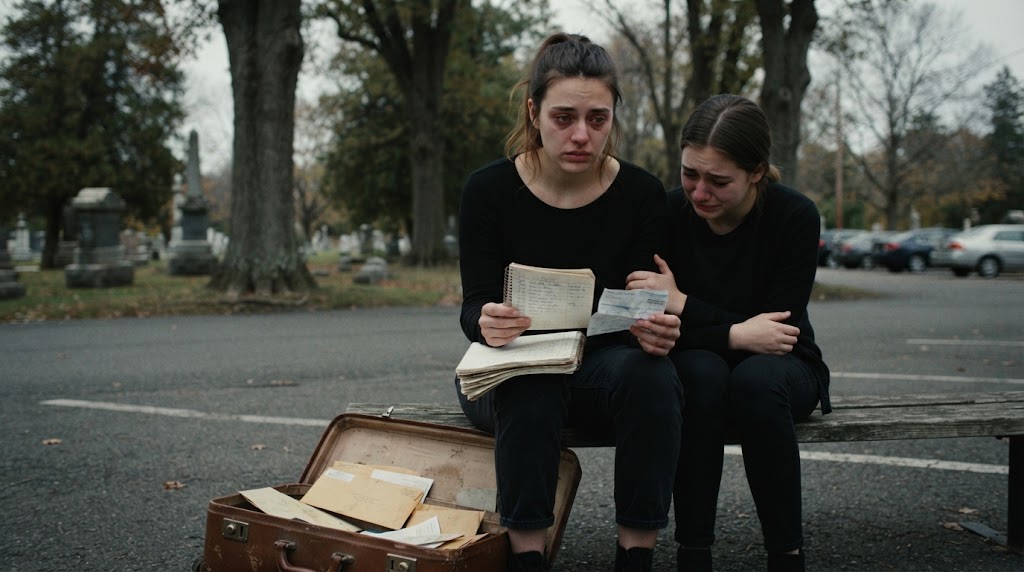
I was almost at my car when I heard Lily calling my name. My cousin was dragging a worn brown suitcase across the parking lot.
She said Mom had asked her to give it to me, but only after the funeral. I was exhausted and grieving, so I made a bitter joke about Mom finally paying me back. Lily didn’t smile.
Inside the suitcase were old pay envelopes, a notebook, and a bank statement. The balance read $18,240.
The first entry in the notebook was dated seven years earlier. It matched the exact amount Mom had taken from my very first paycheck.
My knees gave out, and Lily helped me onto a nearby bench. When I looked up, she was crying, and I wondered how much she had known all along.
How Half My Paycheck Became Family Duty
When I was 16, Mom found me a weekend job at a grocery store. I was thrilled, because I wanted to save for a used car and a little freedom from home.
On my first payday, she asked for half. I assumed it was for household bills, but she gave it straight to Lily.
Lily was 14 back then. Her father, Ethan, who was Mom’s brother, had walked out, and her mother, Sylvia, was struggling to get by.
I tried to bargain for a smaller amount. Mom refused, and from that day on, half my paycheck vanished every payday.
At 18, I worked longer hours. At 19, I gave up on community college in another city and took a second job, and Mom still expected her share.
The Summer I Needed New Tires
One evening, I asked to keep a full check because my car needed repairs. Mom told me to pick up another shift.
I reminded her I was already working two jobs. She said my cousin didn’t have the options I had.
I asked whether she would still demand half my paycheck if Lily didn’t need help. She told me I didn’t understand what family meant.
At 20, I moved out and stopped handing over half my paycheck. Mom called me selfish for it, but I had rent to pay.
When she got sick a few years later, I still drove her to appointments and brought her groceries. I loved her, but the resentment never fully went away.
What the Notebook Revealed
At Lily’s apartment, we spread everything across her kitchen table. The notebook had three columns: money received, money spent, and money saved.
Lily explained that some of it had paid for groceries, school supplies, and bills when she was younger. But not all of it had been spent.
Mom had started saving the leftover money years earlier. Lily found out at 17, and at 18 the savings were moved into an account in her name.
So Mom knew the money wasn’t all needed, yet she kept taking half my paycheck anyway. Lily nodded when I asked her directly.
When Lily turned 18, she had asked to return some of it. Mom told her I would be offended and think they were rejecting my help.
I laughed, though nothing about it was funny. Mom had never once asked me if I wanted to help.
Lily admitted she should have called me anyway, and I agreed. She told me she had added $2,000 of her own wages after I moved out, so the other $16,240 came from half my paycheck over the years.
She had waited because she thought I hated her. I had skipped family dinners and barely spoke to her, so I understood why she believed it.
But she was only 14 when this started. She never chose any of it.
The Records That Proved Mom Knew
That night, I compared the notebook with my old pay slips. One entry stopped me: $180 taken when I was 19, the summer I begged to keep enough for new tires.
While I was working extra shifts, that money from half my paycheck had been sitting in savings. I called Lily and asked if she had known.
She had overheard us arguing, but Mom had told her the money was mine to give and that I wanted to give it. I told her I was never giving half my paycheck; Mom was taking it.
The next morning, I went to Mom’s house and found her household notebook under a stack of old receipts. She had recorded her own contributions to Sylvia right beside what she collected from me.
Some months, Mom gave more of her own earnings than she took from mine. She truly had been helping.
Then I found an entry written shortly before I moved out. Mom had noted my complaint about paying for her decisions, and beneath it she admitted I was right that she had never asked.
Later pages showed Lily’s savings had grown enough that she no longer needed every payment. Mom had reasoned that helping family shouldn’t stop just because life got easier.
Two Apologies at Lily’s Table
Lily had mentioned a sealed envelope tucked beneath the suitcase lining. I found it, but I didn’t open it right away.
I asked Lily why Mom insisted on waiting until after the funeral. Lily said Mom didn’t want me upset during the goodbyes and feared I would stop visiting if I learned the truth sooner.
Even at the end, Mom was deciding when I was allowed to be angry. She should have just talked to me.
I admitted that for years I thought Lily had everything handed to her. She said she always knew I was missing out, and she believed I blamed her.
We both apologized. It didn’t erase the past, but for the first time, we were talking about our own choices instead of defending Mom’s.
Then Lily slid the bank statement toward me. She wanted me to have all of it, because I had worked for it and she wanted me to have real choices. I asked for a few days to think.
Speaking Up at Mom’s Memorial
The following Sunday, I went to a small gathering in Mom’s memory. Hearing stories about her was comforting, until Aunt Mary praised how generously Mom had raised me.
I quietly said that some of Mom’s help had come from half my paycheck. The room went silent.
Aunt Mary insisted Mom had been teaching me responsibility and that families make sacrifices. I agreed that families do, but I said I never got to decide how much I could give.
Lily spoke up beside me. She said I had worked hard for that money and should never have been made responsible for her.
I told everyone I loved my mother, but that didn’t make every decision she made right. Outside, Lily thanked me for saying I didn’t blame her.
Mom’s Letter and the Words I Waited For
That evening, I sat in Mom’s house and opened the envelope. Inside were two handwritten pages.
She wrote about how frightened she had been when her brother Ethan abandoned Sylvia and Lily. Helping them had felt right, and then she decided I should help too.
She admitted she had convinced herself that taking half my paycheck was teaching me something useful. She also admitted I had never been selfish.
She confessed she knew about Lily’s savings and stayed quiet because she couldn’t explain why she kept taking my money. She even remembered the tires, and she apologized plainly for being wrong.
For years, I had longed to hear those words. Now they sat in my lap, and I couldn’t ask her a single question.
Her final request was that the money never come between Lily and me. Even while apologizing, she was still asking something of me, and I wished she had trusted me to decide what I could give.
What I Did When Half My Paycheck Came Back
The next day, I called Lily over and showed her the letter. She read it slowly and said she was sorry Mom never told me herself.
I said I wanted to accept the money, but first I asked whether she was returning it by choice or because Mom told her to. She said it was her own choice, and that she had her own job and savings now.
I told her I planned to use the money from half my paycheck for evening classes and save the rest. I had wanted to study for years, hoping it could lead to a better job.
That morning, I had almost offered her several thousand dollars out of pure habit. But I didn’t want another arrangement where one of us felt responsible for the other’s future.
So we made a different promise. If either of us ever needed help, we would ask, and the other would be honest about what she could manage.
Lily arranged the transfer right there on her banking app. Afterward, we agreed to spend time together that had nothing to do with money.
Choosing a Life of My Own
Three weeks later, I registered for an evening class. The woman helping me showed me which credits could transfer if I ever moved.
For years, I had planned my jobs and shifts around Mom’s needs. Even after moving out, I stayed close by, ready whenever she called.
Over dinner, I told Lily I had signed up and found an opening in another city doing work I would actually enjoy. I hadn’t applied yet, because I wanted her to hear it from me first.
She said I didn’t need her permission, and I said I wasn’t asking for it. She told me the application was simple, the move might be hard, and the choice was mine.
When the bill came, Lily asked if she could pay. I almost argued, then simply said thank you.
Lessons Families Can Take From This Story
Helping relatives through hard times is a loving instinct. In my case, though, half my paycheck became a family rule that no one ever discussed with me, and that silence turned generosity into resentment.
If your family is working through money tensions, the free budgeting and planning tools from the Consumer Financial Protection Bureau can help everyone talk openly. For more real stories about family conflict, trust, and healing, visit Divorce Matters Today.
Back home, I read the job posting one last time, attached my resume, and clicked submit. Then I called Lily, looked at the empty suitcase beside my desk, and realized half my paycheck had finally led me somewhere I chose for myself.