Husband’s Final Wish and the 1 Heartbreaking Secret He Left
Sally was eight months pregnant when she stood in a hospital hallway after carrying out her husband’s final wish. Mark had asked to become a donor, and she had promised to honor that choice. She did not yet know that he had quietly prepared for the storm that would follow.
As she was leaving, Dr. Rivers hurried after her with a plain envelope. Mark had handed it to him three weeks earlier and made him promise it would reach Sally only after he was gone.
Her name was scrawled across the front in Mark’s messy handwriting. Nothing else was written on it. The doctor said Mark believed she would understand when she needed it, and that she did not have to open it right away.
Apart from their daughter, that envelope would become the most important thing Mark ever gave her. To understand why, you have to go back a few months, to a porch, a pregnancy, and a marriage that had no secrets.
A Name Chosen on the Porch
Before illness entered their lives, the biggest debate in their house was about baby names. Mark pitched ideas with total confidence, and Sally shot most of them down. She rejected Clementine because it reminded her of an orange.
Then Mark suggested Cecelia. His grandmother used to sing a song with that name in it. He admitted she sang badly, but the memory always made him smile.
Sally repeated the name softly, and the baby kicked under Mark’s hand. He joked that their daughter had just voted. Sally laid her hand over his and said the name again, and this time it sounded like it belonged to someone real.
They had wanted a child for years. That evening on the porch felt like the start of everything they had waited for.
The Diagnosis That Changed Everything
Six months into the pregnancy, Mark got sick. The doctors gave him no more than three months. There was a real chance he would never meet his daughter.
Even his laugh changed. Sally could hear it catch in his chest. Neither of them knew yet how much weight her husband’s final wish would carry in the months ahead.
By her eighth month, he was weakening faster than anyone expected. One morning she found him fighting with his shirt, the buttons in all the wrong holes. She told him he looked like a confused accordion, and he managed a tired laugh.
He noticed her watching him closely and asked why she seemed to be memorizing him. She told him the truth. She wanted to remember everything so she could one day tell Cecelia who her father really was.
Why Mark Chose Organ Donation
One evening, with the baby kicking hard, Mark said he wanted to donate whatever could be used when the time came. Sally begged him not to talk about dying while their daughter was moving under his hand. He said that was exactly why he had to.
His reasoning was simple. If he could not watch his own child grow up, maybe someone else could get more time with their family. That was the heart of her husband’s final wish, and he never wavered from it.
Sally was angry, scared, and heartbroken all at once. She admitted she had no idea how to do this without him. Mark confessed that he was scared too, and told her she would have to figure it out as she went.
She called it a terrible plan. He said it was the only honest one he had.
A Mother Who Could Not Let Go
Mark’s mother, Violet, had always been warm with Sally. During the worst of the morning sickness, she showed up with groceries and tiny yellow socks, insisting the baby would otherwise drown in pink.
But Violet did not support the donation. Mark told Sally his mother had raised it with him more than once. She could not handle the idea that any part of her son might belong to strangers.
Sally offered to talk to her. Mark refused. He knew his mother was losing her son and would need someone to be angry at, and he did not want that person to be his wife.
He asked Sally not to make Violet’s grief her job. Sally agreed, but she sensed that her husband’s final wish might one day divide the family.
Soon after, Mark began asking to speak with Dr. Rivers alone. When Sally pressed him, he said it was something he needed to handle himself, but that it was for her. She hated not knowing. Still, she trusted him and let him keep the secret.
The Envelope Dr. Rivers Kept
Mark died on a rainy Tuesday, with Sally’s hand wrapped around his. In the days that followed, carrying out her husband’s final wish meant long talks with the donation team, who explained that what could be used depended on medical suitability. Sally answered their questions and signed what needed signing.
Whenever anyone asked what Mark had wanted, her answer never changed. Yes, this was her husband’s final wish.
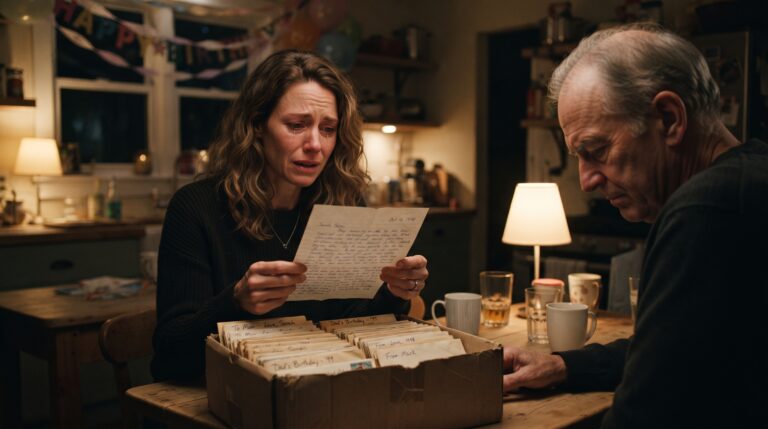
At home that night, she opened the envelope. Inside were a flash drive and a short note. Mark asked her not to watch it just because she missed him. He wanted her to watch it if someone made her doubt him, or, more importantly, if someone made her doubt herself.
Sally told the note that dead men don’t get to give instructions. The baby kicked sharply under her ribs, and she said her father deserved it. Then she put the flash drive away.
When Grief Turned Into Blame
Two days later, Sally found Violet in the nursery refolding a pink blanket. Violet wanted to know whether they had taken everything from Mark. Sally explained that only what could be donated would be used.
Violet listed his heart, his skin, and his eyes, all going to strangers. Sally gently explained that corneal tissue, not whole eyes, can be donated. Violet asked bitterly whether the nicer wording was supposed to make it easier. It didn’t.
Violet accused Sally of going along with her husband’s final wish too easily. Sally said it had never been easy. Then Violet looked at her belly and said Sally still had part of Mark. Sally asked her not to drag the baby into it, and Violet walked out.
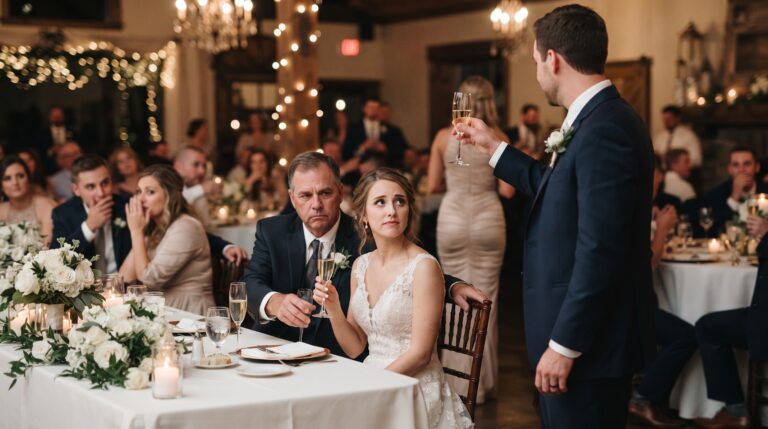
At the memorial, things got worse. When a relative said Sally must be proud of Mark’s generosity, Violet cut in. She said Mark could barely walk across a room, so how could anyone believe he calmly chose all of this?
Sally said he had. She had simply honored her husband’s final wish. Rather than fight in front of everyone, she walked away, believing silence was the kind choice.
By evening, that silence had filled with doubt. Mark’s aunt asked whether he had been taking anything that affected his judgment, because Violet had suggested he was not thinking clearly. Sally realized people were quietly wondering whether she had pushed a dying man into a decision he didn’t want.
Standing Up for Her Husband’s Final Wish
That night, Sally sat in Cecelia’s nursery and plugged in the flash drive. Mark appeared on the screen, thinner than she remembered. The first thing he did was tell her to turn it off if she was only watching because she missed him.
Then he got serious. He explained that his mother had asked him more than once not to donate. She had even asked whether the decision was really his or Sally’s, and he had told her plainly that it was his.
Mark said he understood his mother’s pain, but grief did not get to turn Sally into the villain. He asked Sally not to protect him by letting herself get hurt. He also asked her not to let Cecelia grow up thinking her father was too weak to make his own choices.
Sally paused the video and felt something new. For the first time since he died, she was angry with him. He had seen this coming and never warned her, as if his wife needed protecting from everything.
It was an awful feeling. It was also honest. And it gave her the strength to defend her husband’s final wish without apology.
Two days later, Violet arrived with a small embroidered blanket and a new idea. She wanted Cecelia to carry Mark’s name somehow, and she claimed Mark had told her he’d changed his mind about the baby’s name.
Sally knew that was not true, because she and Mark had chosen Cecelia together. It felt like one more attempt to chip away at her husband’s final wish and every other choice Mark had made. When Violet hinted that Mark had kept things from her, the words stung, but they did not make Violet right.
Sally asked her to go home. She pointed out that Violet had questioned Mark’s judgment, let others question hers, and was now rewriting what he wanted for their daughter. When Violet said she had just lost her son, Sally agreed, then reminded her that she had lost her husband while carrying the child he would never meet.
She told Violet they could grieve in different ways without tearing each other apart. Violet left in silence.
A New Life and an Old Wound
Two weeks later, Cecelia arrived in a quiet, uncomplicated delivery. When she was placed on Sally’s chest, she tucked her thumb inside her fist, exactly the way Mark used to sleep.
When Violet came to meet her, she asked whether she could hold the baby. That small question meant a great deal to Sally. Violet cradled Cecelia and told her she had known her daddy when he didn’t have teeth either. For a moment, grief stopped fighting them.
A few weeks later, the peace cracked. Sally overheard Violet telling Mark’s aunt that Mark had not been himself at the end and that Sally had made the decisions. Violet still could not accept that Sally had simply followed her husband’s final wish, and she was holding Cecelia as she said it.
Sally took her daughter back and told Violet she would never say those words in front of Cecelia again. Violet argued that the baby was too young to understand. Sally replied that she wouldn’t always be.
The Video That Spoke for Mark
Violet broke down. Sally got to see Mark in their daughter every day, she said, so what did she get? Sally’s answer was simple: she had Sally. Sally had loved her too, and Violet had spent weeks making her the enemy because that was easier than admitting Mark chose something she couldn’t stop.
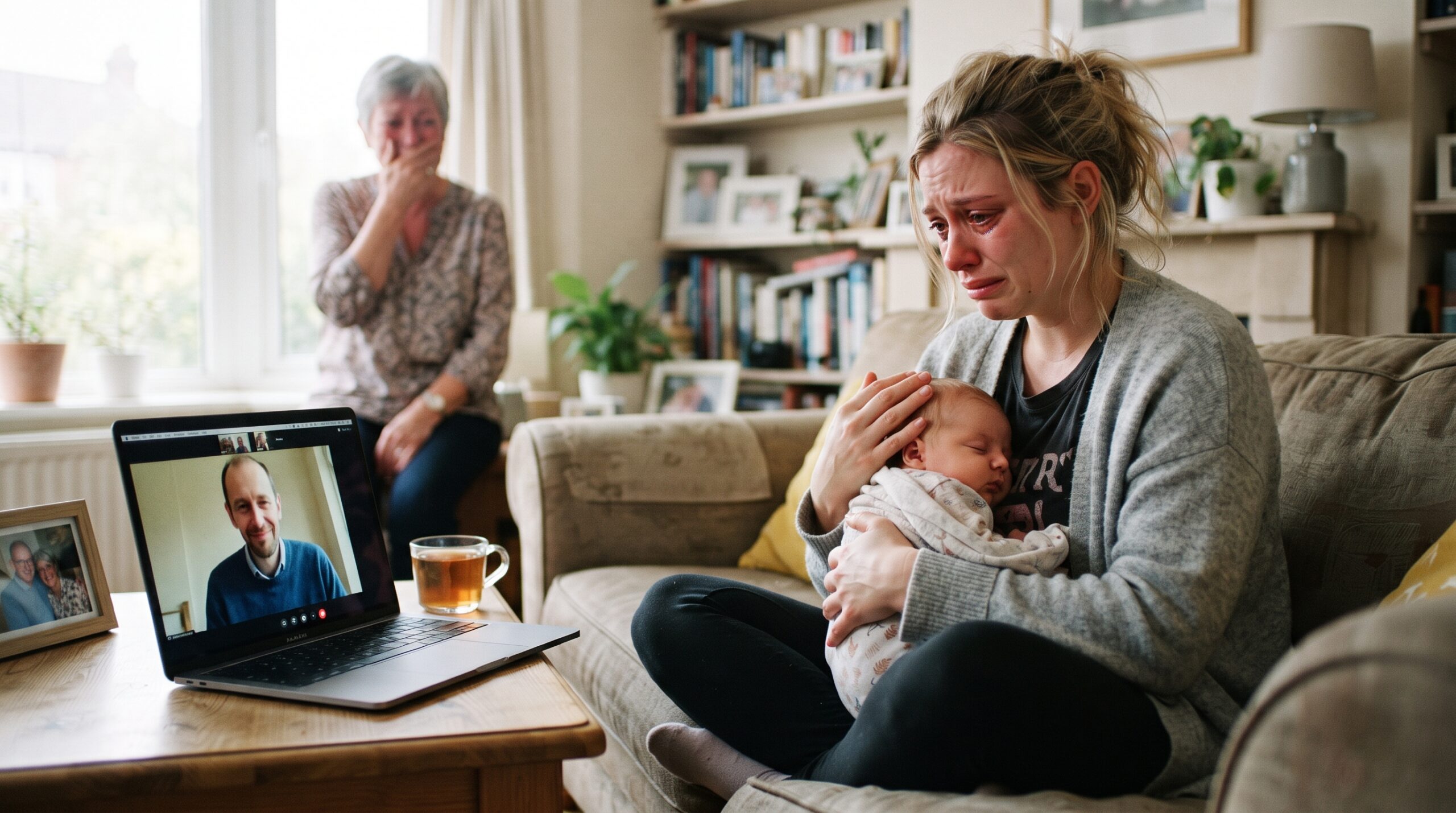
When Violet insisted Mark hadn’t been himself, Sally told her Mark had predicted she would say exactly that. She opened her laptop and pressed play.
Mark’s voice filled the room. He said clearly that donation was his choice. He told his mother that loving him first did not give her the right to decide which choices were his, and he asked her not to make Sally prove her love by agreeing with her. Nobody in the room could argue with her husband’s final wish when it came from Mark himself.
He also asked that Cecelia never be put in the middle. She was not something he left behind, he said. She was his and Sally’s daughter, and she deserved to become herself.
Violet whispered for Sally to turn it off, and she did. Then Sally set her terms. She wanted Cecelia to know her grandmother, but Violet could never tell the girl that Sally made her father do this, and could never make her responsible for how much Violet missed him.
Violet admitted she didn’t know who she was without her son. Sally said she didn’t know who she was without Mark either. But Cecelia didn’t need them to have the answer yet.
How a Husband’s Final Wish Brought a Family Back Together
Six months later, Violet sat on Sally’s living room rug while Cecelia wrestled with a wooden block. Their relationship was not fixed, but it was healing.
Violet now asked before visiting and before picking Cecelia up. When she missed Mark, she said she missed Mark, instead of turning her sadness into blame. In her own way, she had come to respect Sally for keeping her husband’s final wish.
That afternoon, Cecelia gripped the block so tightly her knuckles turned white. Violet admired the grip, and Sally laughed and said it was just like Mark.
For a second, the old instinct crossed Violet’s face, the need to find her son everywhere. Then she shook her head, touched the baby’s tiny hand, and said the grip was Cecelia’s own.
Cecelia squealed and threw the block into Violet’s lap. Both women laughed. For the first time since Mark died, neither of them needed Cecelia to prove he was still here.
What This Story Teaches About Grief and Choice
Honoring a husband’s final wish can be one of the loneliest acts of love. Sally was pregnant, grieving, and suddenly cast as the person to blame. Yet she held her ground because she knew the decision had belonged to Mark alone.
Mark’s foresight mattered too. By recording his wishes in his own voice, he protected his wife from doubts he knew his grieving mother might raise. When a husband’s final wish is clearly written or recorded, no one has to defend it alone.
Grief also makes people say things they would never say otherwise. Violet was not a villain. She was a mother who could not accept losing her son, and for a while she aimed that pain at the woman who honored her husband’s final wish.
Families facing end-of-life decisions often need more support than they expect. If you are thinking about becoming a donor, the official U.S. resource at organdonor.gov explains how registration works and why sharing your decision with loved ones matters. Talking openly now can protect a husband’s final wish, or anyone’s, later.
Loss can also reshape marriages, in-law relationships, and family roles in ways that feel overwhelming. For more real-life stories and guidance on relationships, family conflict, and difficult transitions, visit Divorce Matters Today. Many readers find comfort in knowing others have walked a similar road.
In the end, Mark left his family two lasting gifts: a daughter free to become entirely herself, and a clear voice that ended the blame. Sally’s courage in honoring her husband’s final wish turned a painful season into the beginning of healing.