My SIL Held Her Wedding at My Grandma’s Lake House but Destroyed the Garden and Turned the Yard Into a Dump – So I Brought Her a Wedding Gift She’d Never Forget
The Ledger in the Soil
The large cedar box had sat in the lake house pantry for years, untouched except on quiet mornings when the smell of dry wood and dried herbs felt like company.
Inside were hand-carved wooden markers, spools of rough twine, a set of metal numbering stamps, and Grandma Penny’s garden ledger.
It was less of a maintenance log than an unwritten family album, laid out across a heavy sheet of draftsman’s paper where every patch of loam corresponded to a date, an event, or a recovery.
There were two hundred and eighty-six entries in all.
When Penny passed away, leaving the cottage by the water to her granddaughter Nadia, she had left only four handwritten words of instruction: *Keep it lived in.
* Nadia took the request literally.
She preserved the sunny yellow kitchen paint, the worn griddle, the hand-stitched cushions, and, above all, the earth outside.
The pink peonies along the edge had been planted in the spring of 1996 to mark Nadia’s birth.
The lavender bordering the flagstones had gone into the ground in 2008, chosen deliberately because hospital rooms smelled of sickness and Penny wanted something restorative waiting for her when she returned from surgery.
There were anniversary roses, white daisies planted after Nadia’s first school recital, and a patch of unruly bee balm tucked into a corner because Penny had decided the household needed something stubborn and bright after a long, exhausting summer.
To Nadia, tending the beds each weekend was an act of keeping faith.
To her sister-in-law, Kelsey, the property looked entirely different: it was an aesthetic backdrop sitting idle.
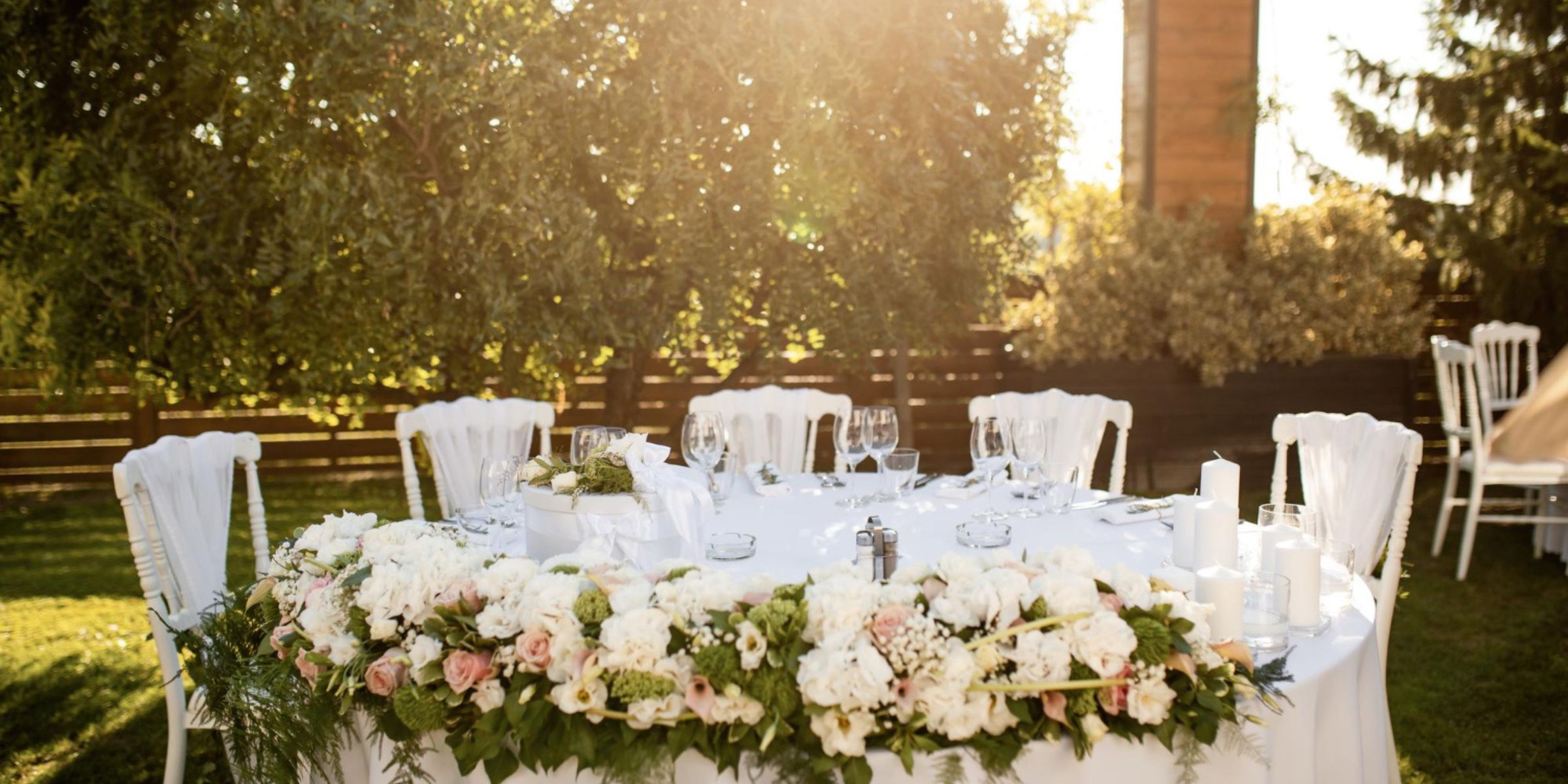
The trouble began forty-eight hours before Kelsey’s wedding day, when a ruptured pipe flooded her original reception venue.
Kelsey arrived unannounced, armed with fabric swatches and planning binders, insisting that the lake cottage was her only workable alternative.
Nadia was hesitant.
The cottage was an intimate home, not an event facility, and the grounds were fragile.
But when family pressure mounted and her husband, Zac, quietly looked to her to ease the crisis, Nadia conceded under explicit conditions.
Nothing inside was to be rearranged, no furniture was to be dragged across the soft turf, all waste had to be cleared immediately, and the garden was entirely off-limits.
Kelsey agreed without hesitation, brushing off the warnings with an airy assurance that she knew how houses worked.
Circumstances unraveled on the morning of the ceremony.
An unexpected medical emergency sent Nadia’s aunt to the hospital with heart complications.
Nadia and Zac spent the day and the following night in waiting rooms, unable to attend the reception.
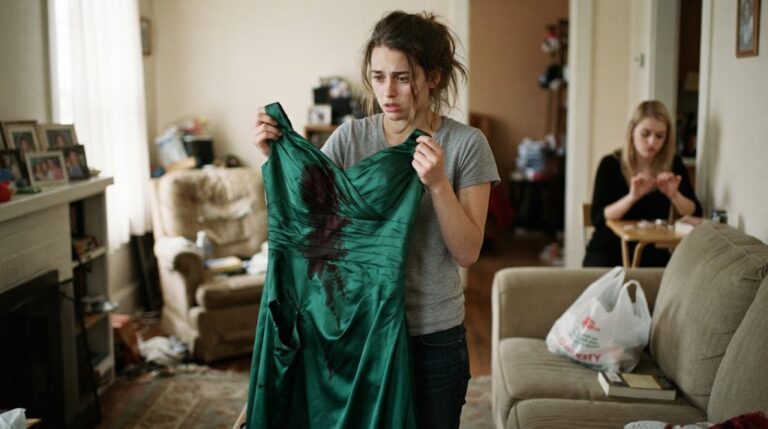
When they finally drove out to the lake cottage the next morning, exhausted and emotionally drained, the devastation began before they even stepped out of the car.
One of Penny’s handmade porch cushions lay face-down in the wet gravel, ruined by the overnight rain.
Across the yard, plastic cups, empty champagne bottles, and plastic confetti littered the grass and floated along the edge of the dock.
Deep ruts were gouged into the soggy lawn where heavy banqueting tables had been hauled toward the shoreline.
Inside, damp footsteps tracked mud across the floorboards, dirty plates clogged the sink, and an antique rocking chair sat outdoors with a cracked wooden leg.
The worst of the destruction, however, stood near the water.
A makeshift ceremonial arch had been erected by the lake, draped in greenery stripped straight from Penny’s beds.
The anniversary rosebushes had been clipped down to raw canes.
The lavender had been torn up by the roots.
Brown ribbons tied wilted recital daisies upside down against the lattice, and the thirty-year-old peonies lay discarded in the dirt, their root balls mangled with floristry wire.
When Nadia reached Kelsey by phone, Kelsey was already packing for her departure.
Rather than offering an apology, she dismissed the complaint outright, arguing that she had simply done what was necessary to salvage her wedding photos.
When Nadia pointed out the personal history tied to each plant, Kelsey laughed, pointing out that plants grow back and telling Nadia that cleaning the yard was simply the homeowner’s responsibility.
Zac did not make excuses for his sister this time.
Standing amid the crushed borders with the damp cushion dripping onto his boots, he retrieved Penny’s large rolled map from the study while Nadia brought out the cedar seed box.
Together, they spent the afternoon measuring the perimeter of the loss.
They walked through the trampled borders with the handwritten blueprint in hand, identifying every severed stem, crushed rhizome, and uprooted perennial.
Exactly two hundred and eighty-six plants had been cleared or broken.
Nadia prepared two hundred and eighty-six seed and bulb packets, numbering each one to match the corresponding sector on Penny’s ledger.
She packed them back into the cedar chest, laid a protected copy of the original garden schematic inside, and topped it with a single brass tag labeled **Restoration Kit**.
The delivery arrived at Kelsey’s home the next day.
Her reaction was immediate fury.
She called Nadia to rail against being sent envelopes of dirt, insisting she was not a gardener and offering to hire professional landscapers to fix the issue.
Nadia held firm.
Outsourcing the work would miss the point entirely; an apology bought with an open checkbook was meaningless when what had been destroyed was decades of personal care.
If Kelsey believed things simply grew back on their own, she would have to come out and tend the ground herself, one Saturday at a time.
The following weekend, Kelsey pulled into the cottage driveway in immaculate sneakers and brand-new gardening gloves.
She was sullen and vocal about the indignity of the task, but Nadia simply handed her packet number one—a lavender start—and pointed her toward the coordinates on the plan.
That morning, Mrs.
Collins, a long-time neighbor from down the shoreline, wandered across the property line carrying a pitcher of cold lemonade.
Watching Kelsey struggle with a hand trowel, the older woman remarked gently that Penny had always believed gardens only loved people who continued to show up for them.
Kelsey managed eight plantings before the midday heat, ending the day with blistered palms, dirt-stained clothes, and two hundred and seventy-eight packets left to go.
The dynamic shifted over the weeks that followed.
By the third Saturday, Kelsey had traded her expensive footwear for worn denim and work boots.
As she worked from the schematic, she began asking questions about the uneven intervals and odd groupings in the soil.
Nadia explained the layout: this curve shielded the bench where Penny sat in the evenings; that cluster of bee balm was an act of stubborn optimism during a hard year; those specific perennials were planted the month Nadia learned to read.
Neighbors stopped by periodically, offering memories rather than criticism.
They recalled the terrible frost that nearly took the roses, the herbs Penny brought over for broth when someone was sick, and the way the garden had always served as the neighborhood’s quiet sanctuary.
Slowly, the physical labor ceased to be a punishment and began to register as an education.
Kelsey was no longer moving soil; she was reconstructing someone’s timeline.
By the eighth week, only a single envelope remained: packet two hundred and eighty-six, containing a dormant peony root.
Standing beneath the bare frame of the wedding arbor she had left behind months earlier, Kelsey held the root carefully.
She knelt in the dirt, measured the hole twice to match the notes on the paper, and set it into the bed with quiet precision.
When she finally looked up, she admitted that she had thought she was taking temporary greenery for an afternoon, only to realize she had dismantled the evidence of someone else’s life.
Zac, watching from the edge of the path, walked down with three glasses of water.
He offered an apology of his own, admitting that for years he had pressured Nadia to absorb his sister’s demands simply because it was easier to ask the gentler person to yield.
Keeping the peace, he recognized, had come at the expense of fairness.
When spring arrived along the shoreline the following year, the garden had begun to knit itself together again.
The growth was not identical to what Penny had left behind—some shoots emerged an inch or two to the left, and the foliage had the tentative look of young perennials finding their footing—but the continuity had been restored.
Nadia walked out onto the porch one Saturday morning to find Kelsey already kneeling near the stone path, weeding around the emerging peonies before the tools had even been brought out from the shed.
A young girl from a neighboring rental property paused on the gravel road, peering through the fence and reaching out toward the fresh pink buds.
Kelsey caught the movement and spoke quietly, telling the child to handle the petals gently.
When the little girl asked why, Kelsey adjusted the mulch around the base and replied that someone had spent a very long time loving that flower before either of them had arrived.