Hospice Wedding at 70 Reveals a Heartbreaking Secret
Some acts of kindness look small from the outside. A hospice wedding held in a quiet garden for a 70-year-old woman named Eleanor seemed like one of them, until her funeral revealed that it had quietly closed a circle nearly fifty years in the making.
Daniel had started volunteering at a local hospice a few years earlier. He believed he had a gift for sitting quietly with people. He learned fast that silence in a hospice is heavy, and it is not easy to hold.
A Rookie Volunteer Meets Eleanor
Eleanor was seventy, quick-witted, and the favorite of every nurse on her floor. She could make the whole staff laugh on days when nobody felt like laughing.
The first time Daniel walked into her room, she glanced at his volunteer badge and teased him about being the new guy. When he asked if it was that obvious, she told him it was, because he still looked hopeful.
Her illness was terminal. Yet on her good days, she seemed more alive than anyone else in the building. Daniel began visiting her twice a week, sometimes reading aloud and sometimes just listening to her stories.
Over time, he learned her small rules. She could not stand weak tea, loved crossword puzzles, and always asked what book he had brought, even on days she was too tired to listen. Those little details slowly turned her from a patient into a friend.
Quiet Questions and Hidden Clues
One afternoon, Eleanor looked at his badge again and asked whether his family was from the area. Daniel said mostly. She asked about his mother, and he said yes, her too.
She nodded as if that settled something. Daniel never thought to ask why.
Another time, she studied his face for a few seconds and told him he had her eyes. He assumed she meant his mother. When he asked what she meant, she only smiled and told him to keep reading.
When Daniel asked about her own family, Eleanor looked toward the window. She had no husband, no children, and no siblings still living. She told him not to feel sorry for her. She had lived a life, she said. It was just a quiet one.
He believed her.
The Wish Behind the Hospice Wedding
Weeks later, on a rainy afternoon when she was weaker than usual, Eleanor interrupted his reading. She asked if she could share something embarrassing. Then she admitted she had always wanted to be a bride.
She laughed at herself for still dreaming about a white dress at seventy. Daniel told her it was not silly at all. She explained that she no longer meant the marriage itself. She meant the moment: the dress, the ring, and someone standing in front of her and choosing her.
She looked down at her hands and said she had never had that. The way she said it stayed with Daniel for days. The idea of a hospice wedding started as a passing thought and slowly became a plan he could not let go of.
Planning a Hospice Wedding in Just Days
Daniel went to the hospice chaplain and asked if any rules prevented a symbolic ceremony. The chaplain stared at him and asked whether he was proposing to a patient. Daniel said yes, symbolically, which the chaplain noted was not really an answer.
Once Daniel explained the full story, the chaplain was smiling. The staff quickly rallied around the idea.
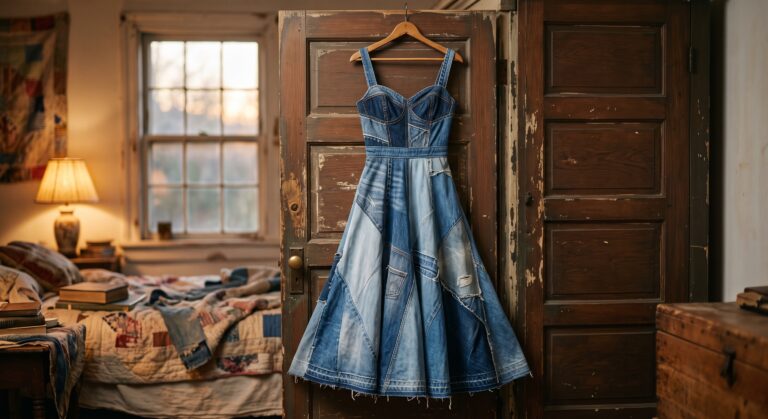
One nurse helped him find a simple white gown at a local charity shop. Another nurse brought flowers. Daniel bought a plain silver ring, nothing fancy, but chosen with care.
When he told Eleanor about the hospice wedding, she covered her face and cried. She reminded him that he did not have to do this, and that he barely knew her. He told her he knew her well enough.
Just before the big day, Daniel worried he had gone too far and asked Eleanor again if she was sure. She squeezed his hand and told him that people spend their whole lives waiting for perfect reasons, and she did not have that kind of time. After that, his doubts disappeared.
A Garden, a Gown, and a Bride at Last
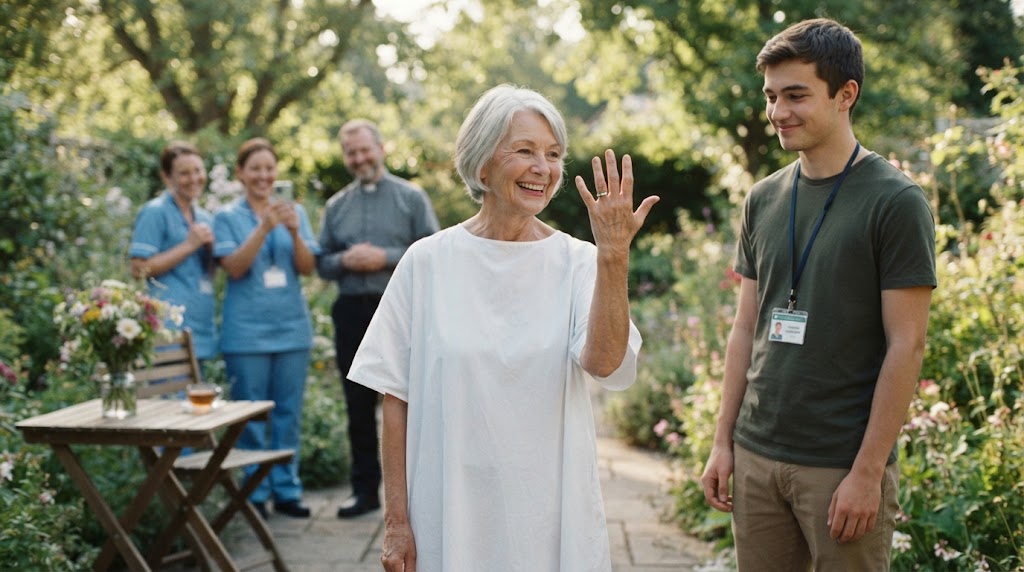
The hospice wedding took place in the garden. It was small. A few nurses came, and the chaplain stood with them. The speaker system was not working, so someone played music from a phone.
Eleanor had a rare burst of energy that day. She stood beside Daniel on her own, without her wheelchair, glowing in white and smiling so widely it looked like it might hurt.
As he slid the ring onto her finger, she asked him to look at her. He said he was. She insisted that he really look. So he did, and he saw a woman who had waited a lifetime for this moment.
She raised her hand toward the nurse taking photos and announced, with pure joy, that she was a bride. Afterward, she ate half a slice of cake and complained that the frosting was too sweet.
Then she fell asleep in a chair with the ring still on her finger. For that one afternoon, the hospice wedding let her be simply Eleanor, not a patient.
A Funeral With Almost No One There
Eleanor died peacefully three weeks later. Her funeral was quiet, almost painfully so.
There were no relatives, no old friends, and no crowd sharing memories of her younger years. There were only a few nurses, the chaplain, and Daniel, the same small circle who had gathered for the hospice wedding.
Daniel noticed a man in a dark suit standing near the back. He assumed the man worked for the funeral home. After the service, Daniel stayed by the grave long after the nurses had walked back to their cars.
As he turned to leave, the man approached and asked if he was Daniel. He introduced himself as Martin, Eleanor’s attorney. He offered his condolences and pulled a thick sealed envelope from a leather briefcase. Eleanor, he said, had asked that Daniel receive it after her funeral.
Why the Hospice Wedding Was No Accident
Daniel asked why she had chosen him. The hospice had assigned him to her, after all. Martin agreed that was true at first. But once Eleanor realized who Daniel was, she decided what to tell him and what to leave for him afterward.
She had recognized his name on his badge, Martin explained, and asked just enough questions to be certain. Then she invited Martin to the hospice, and they spent an afternoon going through her papers. The rest of the story, she wanted Daniel to hear from Rose, his grandmother.
Inside the envelope was an old wedding invitation, yellowed with age. The date was almost fifty years earlier. At the top were two names: Eleanor Louise and Thomas.
Daniel was confused. Eleanor had told him she had never been a bride. Martin said she had not lied. The wedding never happened.
There was also a photograph. Two young women stood side by side. One was clearly Eleanor. The other made Daniel’s stomach drop. It was his grandmother, Rose, decades younger. For Daniel, the hospice wedding suddenly looked like the final chapter of a much older story.
The Sacrifice That Saved a Family
Daniel drove straight to Rose’s assisted living apartment. She was seventy-three at the time. Her warm smile vanished when she saw the photograph, and she whispered Eleanor’s name.
When Daniel told her Eleanor had died three weeks earlier, Rose sat down hard and covered her mouth. Eleanor, she said through tears, had been her best friend. She had never mentioned her because she was ashamed.
Rose explained that at 23, she had been left alone with two small children. Daniel’s mother was two, and his uncle was four. Her husband walked out and took most of the money. She was behind on rent and had no savings.
At the time, Eleanor was engaged to Thomas. The two had been saving together for their wedding. Eleanor gave Rose every cent of it. Rose begged her not to, but Eleanor told her that Rose had children and she had time.
Thomas was furious. He was not angry that she helped a friend, but that she gave away money they had saved together without asking him. He said she always put everyone else before him. The wedding was postponed, then canceled, and Thomas left. Eleanor never married.
Guilt, Distance, and Letters Never Sent
Daniel felt sick. He asked Rose how she could let Eleanor spend her life alone after such a gift. Rose said she had tried to repay her with money, visits, and presents, and Eleanor refused every one.
Eventually, Rose admitted, she simply stayed away. She told herself that her guilt would only remind Eleanor of what she had lost. In truth, she said, she was protecting herself from facing what her friend’s kindness had cost. Her honesty softened Daniel’s anger without erasing it.
He told her that Eleanor never needed help forgetting. She needed to be remembered. Rose broke down and agreed that he was right.
After a long silence, she asked if Eleanor had been alone at the end. Daniel told her about the hospice wedding in the garden. Rose cried again, but this time she smiled. She asked if Eleanor looked happy. Very, he said. Good, she answered.
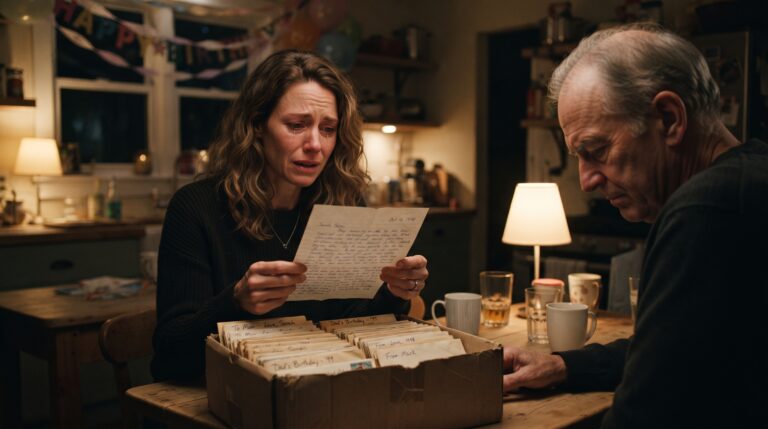
Before he left, Rose brought out a small tin box filled with dozens of letters. Most had never been mailed. She had written on birthdays, at Christmas, and on nights she could not sleep. She admitted that shame makes cowards of people who believe they are being noble.
The box looked more worn than anything inside it, its edges rubbed smooth. Whatever distance Rose had kept in real life, she had returned to Eleanor again and again in private.
One letter had been sent, from the year Daniel was born. In it, Rose thanked Eleanor for saving more than just her that day. She had saved every ordinary moment that came after. That was how Eleanor knew Daniel’s name.
The two women had exchanged a few letters and phone calls over the years, but the last contact was more than a decade old. That was why Rose never knew Eleanor was ill.
As Daniel left, Rose asked if Eleanor had ever mentioned her. He remembered a chat over terrible vending-machine coffee, when Eleanor said some people stay important even after they stop being present. He had assumed she meant Thomas. Now he told Rose that maybe she had meant her.
A Ring Passed Down After the Hospice Wedding
A week later, Martin called Daniel back to his office. He had one more thing to give him: a small velvet box. Inside was an old engagement ring.
It was not the silver band from the garden. It was the ring Thomas had given Eleanor. Daniel had given her a ring for one afternoon. She had kept this one for almost fifty years.
A folded note sat beneath it. Eleanor asked Daniel not to hide the ring in a drawer the way she had. She wanted him to give it when choosing someone still mattered. She ended by thanking him for giving her her day.
Years later, when his daughter Sophie got engaged, Daniel told her everything, from Eleanor’s sacrifice to the hospice wedding in the garden. He offered her the ring and told her she never had to wear it. Sophie smiled and said she would wear it because she wanted to. She wore it on her wedding day.
Rose lived long enough to see the wedding photograph. She held it with both hands and said Eleanor would have loved it. Daniel believed she was right.
What This Hospice Wedding Teaches Us
Eleanor’s life shows how one quiet sacrifice can shape generations. Her gift kept a young mother and two small children afloat. Decades later, that mother’s grandson gave Eleanor the moment she had always wanted. The hospice wedding was more than a kind gesture. It was a debt of love finally repaid, even though no one knew it at the time.
Her story also reminds us that end-of-life care is about more than medicine. Hospice teams often help patients find comfort, dignity, and meaning in their final weeks. To learn more about how this kind of care works, the National Institute on Aging offers a clear guide to palliative care and hospice care.
Stories about love, loss, and the relationships that shape our lives are at the heart of what we share. You can find more real-life stories and guidance on marriage, family, and moving forward at Divorce Matters Today.
Eleanor spent most of her life choosing other people. She once said she only wanted to know how it felt to be chosen. For one afternoon, a simple hospice wedding in a garden finally gave her exactly that.