Invisible Parenting Load: 1 Broken Arm, a Powerful Lesson
Most people never see the invisible parenting load until the person carrying it can’t anymore. For Hope, a mother of five-month-old twins, that moment came with a fall down the stairs and a cast on her right arm.
She assumed the hard part would be healing while caring for two babies. What actually hurt was finding out how little her husband, Derek, understood about what she did every single day.
How a Broken Arm Exposed the Invisible Parenting Load
For five months, Hope had made a habit of solving problems before Derek ever had to notice them. Bottles, baths, night wakings, and laundry all got handled quietly, mostly by her. She was on maternity leave, and somewhere along the way “home” had come to mean “responsible for everything.”
Then she fractured her arm. The doctor put it in a cast and gave her one clear rule: do not lift Luke or Miles with that arm until it healed. Overnight, the invisible parenting load she had been managing with two hands had to be managed with one.
The very next evening, she sat on the nursery floor trying to fasten Luke’s sleeper with her left hand. Miles was starting to fuss behind her, and a cup of tea was going cold on the changing table. Derek walked in, stepped around a basket of clean laundry, loosened his tie, and asked what was for dinner.
Hope reminded him that her arm was broken. He said he knew. Then he waited, as if the question still stood.
“Moms Don’t Get Sick Days”
What followed was the kind of conversation that changes how you see a person. Hope asked for small things: pick up the crying baby, come home an hour earlier when possible, take a day off if he had one, ask about working from home sometimes. She only needed it for a few weeks.
Derek answered that he had worked ten hours, that he paid the bills, and that he was not coming home to start another shift. That one word stayed with her. He was describing his own children as overtime, and the invisible parenting load as something that belonged to her alone.
When she pointed out that she had also held a job before maternity leave, he said that was exactly the point: she was home now. When she said she was only better at baby care because she did more of it, he shrugged it off. Then he told her she was the one who had wanted kids.
That wasn’t true, and Hope said so. He had been showing her nursery ideas before she was even pregnant. But Derek was tired, and he finished with two lines she would not forget: moms don’t get sick days, and her injury was not his problem.
Taking care of the babies, he said, was her job. Then he left the room. Miles kept crying, Luke grabbed the edge of her cast, and Hope whispered to her sons that she had them.
She realized she had been saying some version of “I’ve got it” and “I’m fine” for far too long. That is how the invisible parenting load works. It stays hidden because someone keeps absorbing it.
The Small Moments That Added Up
Hope’s mother, Noelle, came by the next afternoon and found her daughter scrubbing formula off the counter one-handed while Luke kicked in his seat. Noelle knew that Hope cleaned when she felt overwhelmed. She also found a cup of tea in the microwave that had already been reheated twice.
She took the cloth, made Hope sit down, and brewed a fresh cup. When Hope insisted she was fine, Noelle recognized the tone her daughter used when she wasn’t telling the truth. She didn’t lecture. She helped with the boys, washed the bottles, cooked dinner, and went home.
That night, both babies woke up crying, one after the other. Hope nudged Derek and asked him to take Luke. He rolled over and said he had to be up for work in four hours.
When she said she did too, he told her she didn’t, because she could sleep when the babies slept. She got up alone while he pulled the blanket over his shoulder. Nobody tallies moments like these, which is exactly why the invisible parenting load grows so heavy without anyone outside the house noticing.
Three nights later, Noelle’s car wouldn’t start, and she couldn’t come over. The twins badly needed a bath, and Hope promised her mother she would not try it alone. She would wait for Derek.
When he walked in, she asked him to bathe the boys. He told her to skip it, or to use a washcloth and warm water, because that’s what tired mothers do. Then he asked why he should have to come home and take care of the kids too, since she stayed home and did nothing all day.
Hope usually talked through conflict until everyone felt better, mostly him. This time, she simply said okay and went quiet. Derek noticed, and it bothered him.
A Simple Plan He Refused to Follow
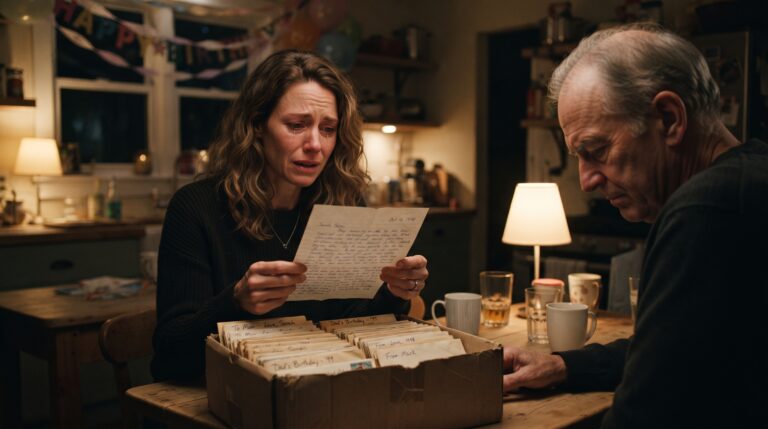
Later, with the boys asleep and her aching arm propped on a folded towel, Hope opened a notebook at the kitchen table. Earlier that day, Luke had reached for her, and she’d had to ask Derek to pick up his own son.
She wrote a short list: baths, evening bottles, carrying the boys upstairs, and one nighttime waking. Looking at it, she understood something important. These weren’t favors, they were things she physically couldn’t do safely. On paper, a piece of the invisible parenting load was finally visible.
The next evening, she slid the page across the table and explained that this was what needed to change while she healed. Derek saw a schedule. Hope told him it was a plan for both of them.
He pushed it away and said he would not do shifts in his own house. So she asked him what he would do instead. He had no answer.
She laid it out plainly. She couldn’t carry both boys, couldn’t manage baths, and had settled Luke alone the night before because he wouldn’t get up. He said she shouldn’t have done that. She agreed, and said he had left her no choice.
Then she asked directly whether he would take over those tasks until the doctor cleared her. He said no. For days, she had told herself his refusals were a misunderstanding, and that single word ended the excuse.
Leaving Home to Finally Heal
Hope called her mother and asked if she and the boys could stay for a few days. Noelle asked if something had happened. Nothing new, Hope told her, and that was the problem.
She explained that she couldn’t keep risking her arm because Derek wouldn’t lift the babies, and she could no longer shoulder the invisible parenting load by herself. She needed to heal properly, because her sons needed her. Noelle, whose car was running again, offered to come get them.
Her mother asked if she was leaving her husband. Hope said no. She was trying to heal, and it was the first time she had said it without apologizing.
An hour later, Derek came out of the garage as she zipped the diaper bag. He told her she couldn’t just walk out. She answered that she had asked him to help her stay, and then she got in the car.
His phone call came that night, demanding she bring the twins home. When she refused, his real worry surfaced: what this would make him look like, and what he would tell his mother. He never asked if she was okay or if her arm was worse.
Hope told him to tell people the truth: she broke her arm, asked for help, and was told moms don’t get sick days. He said she was humiliating him. She pointed out that he hadn’t been embarrassed when he said those things, only now that someone might find out.
Her hand was shaking when she hung up. Noelle noticed and simply reached for Miles. Hope said she could hold him, and her mother said she knew, which felt completely different from being told she couldn’t.
When the Invisible Parenting Load Landed in His Arms
Derek showed up the next evening, angry. His mother had called wanting to see Hope and the boys, and he’d had to admit they weren’t home. Then she asked whether he had been helping since the injury.
He gave her the same line about being at work all day. She asked why his wife had to leave her own house just to get help. He had nothing to say, he admitted, because he knew how it sounded.
Right then, Miles started crying. Derek looked at Hope out of habit. She stayed where she was and told him the baby was his to handle.
He protested that he didn’t know what Miles wanted. Hope said she didn’t know yet either. She had never magically known; she usually just found out.
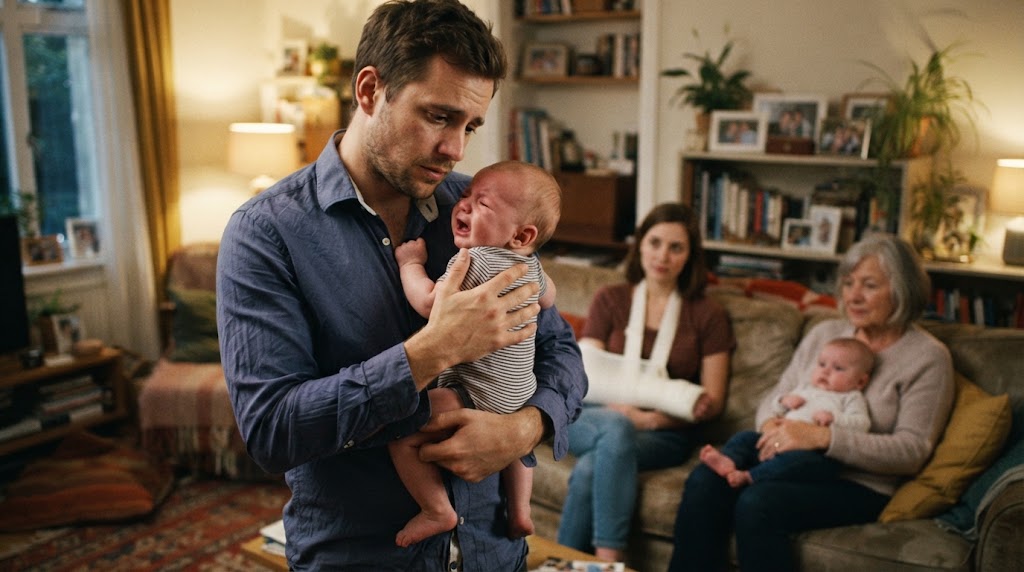
He picked up his son, and the crying got louder. He had been holding him about ten seconds when he declared he was making it worse. Hope had a dozen instructions ready, and she held them back. She told him to start paying attention.
He paced too fast, and Miles wailed. He slowed down, and within a minute the crying eased. For the first time, Derek was feeling the invisible parenting load in his own hands instead of watching her carry it.
Then came the honest part. He admitted that every time he came home, she already knew what the babies needed, and he didn’t. Being asked for help reminded him that he felt useless, so he had wanted her to stop asking.
Hope didn’t let that slide. Being scared, she told him, did not excuse what he had said. He agreed. Still, she had wanted to see him hold one of their sons like that, and now he finally was.
A Clean Kitchen Is Not the Same as Showing Up
A few days later, Derek texted a photo of their spotless kitchen and asked her to come home. Hope replied with a question: what time does Miles usually take his last bottle? The typing dots came and went, and no answer arrived.
That evening he came to Noelle’s and asked what she wanted from him. She wanted him to stop waiting for instructions, and to try without turning her into his manager.
He said he had cleaned the house and thought she’d be happy. She said she would be happier if he knew why Miles cries differently from Luke. He asked her to teach him.
The old Hope would have had a new list written before he finished the sentence. This Hope shook her head. A list would only hand the invisible parenting load right back to her, so she told him to watch his sons, learn them, and be around long enough to know.
He asked what would happen if he messed up. She told him he would, and so would she. She admitted she had spent weeks feeling like a failure because she couldn’t lift her own babies.
When the cast came off, she said, she would get another chance to feel like their mom again. He could have a second chance too, at being better than he had been. But she would not drag him there.
What Changed Over the Next 3 Weeks
Over the following weeks, Derek began picking up his part of the invisible parenting load before she asked. He left work on time twice a week. He put the boys’ appointments on his own calendar.
He learned that Luke settled faster against his chest and that Miles usually needed movement before sleep. He still got things wrong. Hope stopped rescuing him every time, which may have been the hardest change of all.
Three weeks later, her arm had healed enough that she moved some of their things back home. Not everything. Derek noticed she was keeping clothes at her mother’s and asked if it meant she didn’t trust him.
Her answer was about herself. She was learning to trust her own judgment, and if things fell apart again, she wouldn’t wait until she was broken to act.
That night, Miles cried from the nursery. Hope started to get up, but Derek was already on his feet, saying it was the tired cry. A minute later, the house was quiet.
She picked up her tea. It was still warm.
Lessons Every Couple Can Take From This Story
Hope’s story resonates because so many parents recognize it. The invisible parenting load is rarely about one big failure. It is built from dinners, night feedings, and bath times that one person quietly covers.
First, capability comes from practice, not instinct. Hope wasn’t born knowing her sons’ cries. She learned them by being there, and Derek could only learn the same way.
Second, asking for help is not nagging. When one partner has to manage, remind, and assign every task, the invisible parenting load has not been shared at all. It has simply been handed back with extra steps.
Third, boundaries are not punishments. Hope didn’t leave to hurt her husband. She left because her arm needed to heal, and home had stopped being a place where that could happen.
Finally, don’t wait for a crisis. Couples who talk honestly about the invisible parenting load early, before resentment builds, give themselves a much better chance of staying on the same team.
If you’re a new parent feeling stretched thin, trusted guidance on infant care and family well-being is available from the American Academy of Pediatrics at HealthyChildren.org. And if tension at home has you questioning where your marriage is headed, you’ll find more real-life stories and practical guidance at Divorce Matters Today.
For months, Hope believed a good mother carried everything. A broken arm taught her something better: good mothers don’t have to prove how much they can survive, and fathers shouldn’t have to be asked to be fathers. Once the invisible parenting load is finally seen, it can finally be shared.