Old Grocery Coupon: A Widow’s Emotional 30-Year Surprise
For three years, a 75-year-old widow kept an old grocery coupon tucked among her late husband’s important papers. She was never quite ready to use it.
She didn’t know exactly what the old grocery coupon was worth. She only knew he had handed it to her shortly before he died, with one simple instruction: if life ever got too hard, take it to the store.
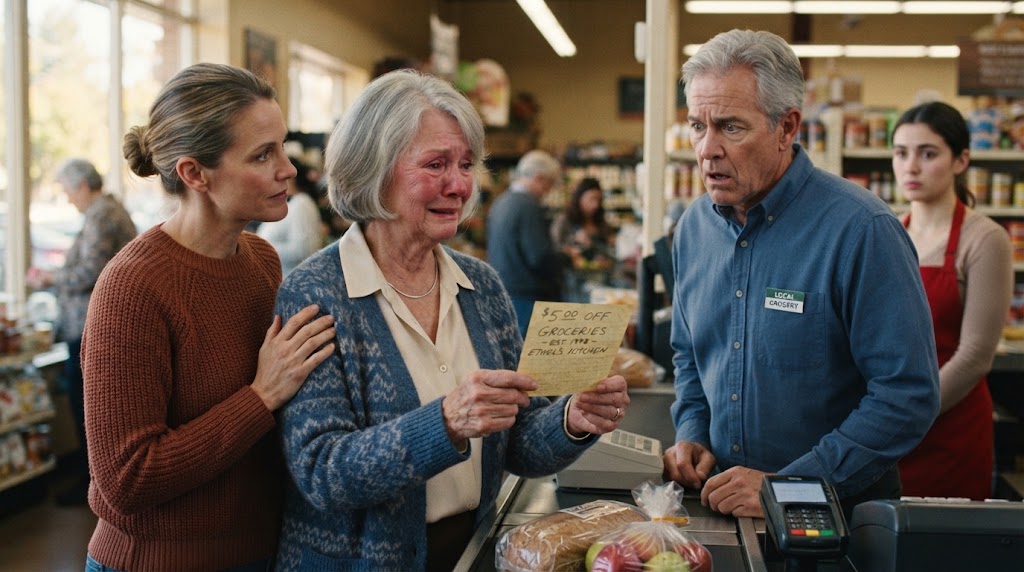
When she finally did, a young cashier laughed at her in front of a full line of shoppers. Minutes later, the store manager read the faded signature on the paper and went pale. What followed was a story about quiet generosity, long memories, and a promise that waited three decades to be kept.
A Careful Life on a Small Pension
After her husband passed away, she lived on a modest pension. Every Sunday, she sat down with scissors and the weekly ads, clipping coupons and planning her meals around whatever was on sale.
Her daughter, Leah, knew money was tight, but her mother rarely complained. She had shopped at the same neighborhood grocery store for almost 40 years and knew its aisles the way some people know their own kitchens.
One Tuesday, Leah went along for the weekly trip. Nothing seemed unusual until they reached the checkout lane, where her mother’s carefully sorted stack, including an old grocery coupon she had brought from home, drew unwanted attention.
The Cashier Who Laughed at an Old Grocery Coupon
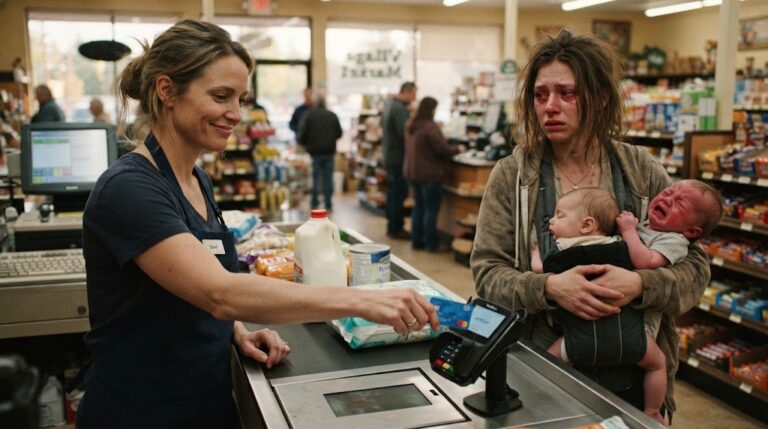
The cashier, a young man whose name tag read Ezra, sighed loudly when he saw the coupons. He asked if she really planned to use all of them, and she quietly explained that they helped her afford her food.
His answer stunned everyone within earshot. In a voice meant to carry, he suggested she simply buy less if she couldn’t pay for it. Shoppers turned to look, and the older woman’s face flushed a deep red.
Leah pushed back, telling him there was no reason to speak to her mother that way. Ezra brushed her off and kept scanning, grumbling each time a coupon needed adjusting.
Then he reached a yellowed slip that looked nothing like the others. It carried the store’s old logo and a handwritten signature across the bottom. He mocked the old grocery coupon as ancient, joking that the store was not a museum.
The widow asked him to handle it carefully, explaining it had been given to her husband long ago. Ezra shrugged and said her husband should have used it back then. She went silent, and Leah later said the look on her mother’s face was harder to watch than anything she had seen at the funeral.
A Manager Recognizes a Familiar Signature
Leah demanded a manager. A gray-haired man in a blue shirt soon arrived, his tag identifying him as Adrian. Ezra waved the paper at him and called it something from the Stone Age.
Adrian took the old grocery coupon, clearly annoyed at first. Then his eyes landed on the signature, and his expression shifted. He turned it over, and the color drained from his face.
He quietly asked where she had gotten it. When she said her husband gave it to her before he died, Adrian locked the register and told Ezra to step away, promising to call in another cashier for the waiting line.
He asked for her husband’s name. When she told him, he tightened his grip on the paper. His father, he explained, had known that man well. His father had also founded the store.
Under the faded logo, in blue ink, was a message thanking her husband for everything he had done for the family and promising that his family would always have a place there. Another line pledged grocery help for his household whenever it was needed.
Leah asked her mother if she had known what the note said. Her mother answered softly that her husband had only told her it would help someday.
Before anything else, Adrian made one thing clear. Whatever happened next, her groceries that day were covered.
What the Old Grocery Coupon Really Meant
In his small office, surrounded by framed photos of the store from decades earlier, Adrian began with an apology. Nobody, he said, deserved to be treated that way. When Leah asked why an employee felt free to do it, he made no excuses and said he would deal with it.
He then asked the widow whether her husband had ever mentioned the store’s money troubles from years ago. She remembered him spending several weekends helping Adrian’s father with repairs.
That was about 30 years earlier, Adrian explained. The refrigeration equipment kept failing, the bills were piling up, and his father feared the business would close for good.
Leah’s father had worked most of his life as a maintenance supervisor, a man who could fix almost anything. She remembered him coming home worn out on certain Sundays, his work clothes streaked with grease. She had always assumed he was earning extra pay.
He wasn’t. According to Adrian, he repaired equipment the store couldn’t afford to replace, found cheaper parts, and refused payment for his labor. The old grocery coupon, Adrian said, was one of the rare personal promises his father wrote for people who had shown his family extraordinary kindness.
A Promise Kept in a Bedside Drawer
While Adrian stepped out to check the store’s old records, Leah asked her mother why she had never mentioned any of this. Her mother looked down and admitted she never thought she’d need it.
Then she shared a memory she had kept to herself. A few weeks before her husband died, he called her into their bedroom, opened the drawer beside the bed, and handed her the old grocery coupon. He told her to bring it to the store if things ever got too hard, calling it an old promise they would remember.
She filed it away with his important papers. Over the next three years, as prices kept climbing, she thought about using it more than once. Each time, she put it back and told herself she could manage one more month.
Leah gently said she could have asked for help. Her mother replied that Leah had her own bills. But Leah sensed the real reason ran deeper. Using it meant admitting how much her life had changed.
This month, after paying her bills, she couldn’t cover everything on her list. She hoped the old grocery coupon might bridge the gap, and even then, she nearly left it in her purse.
The Loan That Saved a Neighborhood Store
Adrian returned with a thin folder and an old photograph. In it, two young men stood smiling beside a delivery truck outside the store. Leah instantly recognized her father’s dark hair, broad shoulders, and crooked grin.
The photo, Adrian said, was taken the day the refrigerated section reopened. The widow studied it closely. Her husband had never shown it to her.
Inside the folder was something even more surprising. Adrian had always believed an uncle lent his father money when the bank refused more credit. Instead, the loan agreement carried the signature of the widow’s husband.
To Leah’s surprise, her mother said she had known about it. Back then, the couple was saving for a bigger house. Her husband told her a friend needed the money more urgently, and together they agreed to wait.
Leah remembered that house. She had spent weeks dreaming about a bedroom with two windows, until the family suddenly stopped talking about moving. Now she finally understood why.
The loan was repaid several years later, and Adrian’s father had kept the record. But a handwritten note clipped to the agreement revealed more. Without that money, his father wrote, the store couldn’t have paid its suppliers that month and would have closed before the repairs were finished.
Adrian’s father had wanted to thank the man publicly once the store recovered, but he refused. The old grocery coupon, Adrian believed, was his father’s way of making sure he could return the favor someday.
Respect Shouldn’t Depend on a Backstory
Leah thought back to Ezra’s comment. Her father had helped keep that store alive, and three decades later, his widow had been mocked for needing a little help.
So she asked Adrian a pointed question. If her father had never helped his family, would he still care how the cashier treated her mother?
Adrian paused, then admitted it was a fair question. What Ezra did was wrong before anyone read the old grocery coupon, he said, and her father’s history did not make her mother more deserving of respect than any other customer.
Leah said she hoped he would remember that after they left. He promised he would.
Honoring the Promise Behind an Old Grocery Coupon
Adrian wanted to do more than cover one trip. As the store’s current owner and manager, he offered to set up a private household grocery account in the widow’s name, funded by the store, with a generous monthly allowance for everyday groceries.
She would never need to show the paper again or explain herself at checkout. At first, she refused. It felt like too much, and she worried people would talk.
Adrian assured her it would work like any other store credit. Leah stayed quiet and let her mother decide. Her mother asked only two things: would she still choose her own groceries, and would anyone have to approve her purchases? Yes to the first, no to the second.
She accepted. Adrian promised the details in writing, then handed the old grocery coupon back to her, saying her husband would want her to keep it.
An Apology Without Forgiveness
Outside the office, Adrian called Ezra over and told him his behavior had been unacceptable. Ezra claimed he thought the old grocery coupon was fake and the line was getting long.
Adrian said the right move was to call for help, not to humiliate a customer. He then explained who the woman’s husband had been, and that the store, and Ezra’s job, still existed partly because of him.
Ezra was taken off register duty while his conduct was reviewed and would need customer-service retraining before returning. He apologized to the widow directly.
She looked at him and said he didn’t need to know her husband to treat her kindly. He agreed. She didn’t say she forgave him. She simply took her daughter’s arm and asked to go home.
Adrian rang up their groceries himself at another register, covered the bill, and gave the widow a copy of the old photograph.
A Frame on the Dresser
On the drive home, the old grocery coupon rested in her lap. When Leah asked if she was okay, she nodded, then shook her head. She wished her husband were there.
He had always told her people would help if she needed them. She assumed he was just comforting her. For three years, she believed using that paper meant admitting she couldn’t manage without him. Now she saw it differently. He simply hadn’t wanted her to face everything alone.
That evening, they found a small frame in her hallway closet. She placed the old grocery coupon inside and set it on her dresser beside his photograph, standing there quietly for a long time.
Her husband, she reminded Leah, always said a good deed should never come with a bill. He helped that family because they needed it, and now, years later, they were helping her.
Small Kindnesses Have Long Memories
The written account details arrived the following week. After her first shopping trip, she called Leah, almost embarrassed, to say she had bought fresh fruit, vegetables, and the coffee she’d given up because it got too expensive. She hadn’t used a single coupon.
She also admitted she would keep clipping them every Sunday. Being careful with money was part of who she was, and that wasn’t going to change.
If you or an older relative are struggling with rising food costs, the USDA’s Supplemental Nutrition Assistance Program offers support that many seniors qualify for but never apply for. For more real stories about family, loss, and starting over, visit Divorce Matters Today.
In the end, the old grocery coupon was never really about free food. It was proof that one man’s quiet generosity had outlived him, and that his wife would never have to carry life’s weight on her own.