
Teen’s Guardian Custody Battle to Protect His Sister
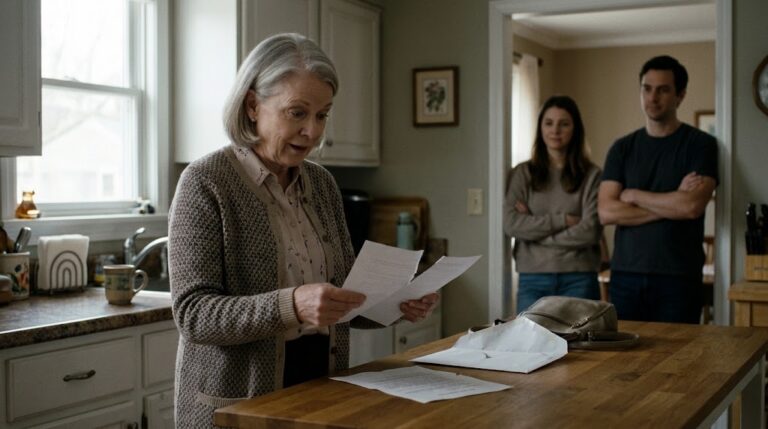
The refrigerator held milk, eggs, yogurt, apples, and three neatly packed lunch containers, yet the woman crouching in front of it still looked skeptical. This was the third time in five weeks that someone had called child services claiming there was no food in the house. Michael, only nineteen, stood in the doorway of his own kitchen with his hands jammed in his pockets, watching a stranger inspect his ability to care for his seven-year-old sister, Vicky.
A Sudden End to Childhood
Three months earlier, Michael had been an ordinary teenager weighing which college dorm meal plan to choose. Then a house fire took his parents’ lives, and he ran back through the smoke to pull Vicky to safety. In the aftermath, a court granted him temporary guardianship while the family’s future was sorted out. Michael deferred his college admission, picked up a warehouse shift in the mornings and a grocery store job in the evenings, and rebuilt his entire life around his little sister’s needs — from finding a detergent that didn’t irritate her skin to learning that she needed him sitting outside her bedroom door, not inside it, when nightmares woke her.
He believed he could manage it all. He kept telling everyone, including himself, that he could.
The Investigator Who Saw Through the Complaints
When the caseworker asked Vicky directly whether her brother ever forgot breakfast, the little girl answered honestly: sometimes he skipped his own meal so hers came first, especially when work called him away. It wasn’t the answer anyone expected, and it revealed more about Michael’s sacrifices than his guilt.
Once again, the complaint against him was ruled unsupported. Before leaving, the investigator quietly told Michael that repeated reports didn’t automatically make him look guilty — but they also didn’t make him look good. She suspected, as Michael already did, exactly who was behind the pattern.
Aunt Denise’s Sudden Interest
Not long after the investigator left, Michael’s aunt Denise arrived in an expensive coat, carrying a gift-wrapped pink coat for Vicky and calling herself “Mommy Denise.” Three months earlier, she had barely known her niece’s routines. Now every sentence toward Vicky came wrapped in affectionate nicknames that felt rehearsed rather than genuine.
Denise and her husband, Howard, were pursuing permanent guardianship of Vicky, with Denise repeatedly hinting that formal adoption would follow. During the visit, Denise let slip that she already knew about the day’s inspection — information she shouldn’t have had unless she was the one filing the complaints. When confronted, she brushed off the accusation, insisting she couldn’t control what other people reported.
The tension escalated when Denise noticed Michael’s untouched college acceptance envelope sitting on the counter, using it as proof that raising Vicky was destroying his future. She told him bluntly that he was still young and deserved his own life, urging him to let the adults handle the rest. Vicky, overhearing everything, snapped her crayon in response.
When Denise leaned toward the little girl and suggested she’d feel like her mother someday, Vicky flatly replied that she already had one — and had lost her. The room went cold. Before leaving, Denise warned Michael that a judge would never choose his cramped kitchen and secondhand furniture over the stable home she could offer.
A Frightening Discovery
A few days later, after a scheduled visit at Denise’s house, Michael found Vicky sitting alone on the bathroom floor, refusing dinner — something she never did after seeing her aunt. When she finally opened up, she asked if she would have to call Denise and Howard “Mommy” and “Daddy,” and mentioned, almost in passing, that a boarding school Denise had spoken of had horses. Vicky said her aunt mentioned sending her away “later,” explaining that grown-ups needed quiet.
The comment planted a seed of dread in Michael that wouldn’t leave him alone.
Overhearing the Truth
The day before the final custody hearing, Michael’s bike tire went flat outside Denise’s house while he was picking Vicky up. Crouched beneath an open window fixing the puncture, he overheard a conversation that changed everything. Denise complained about being tired of “rearranging” their lives around Vicky, admitting the girl cried constantly and refused to bond with them. She and Howard discussed finalizing guardianship quickly so they could enroll Vicky in boarding school and use her trust fund to cover tuition, housing, reduced work hours, and household expenses. Denise even questioned aloud why anyone would take on a child otherwise.
Michael reached for his phone to record the conversation but stopped, realizing it likely wouldn’t hold up as evidence. Instead, he recognized the real question at the heart of it all: what exactly did Denise believe Vicky’s trust fund was meant to pay for?
Building a Case With Facts, Not Accusations
That night, Michael called his legal-aid attorney and repeated everything he’d heard. She told him to forget about a recording and focus on comparing two documents that already existed — Denise and Howard’s submitted financial plan for raising Vicky, and the actual legal restrictions governing the trust. No one had ever placed them side by side.
The trust’s rules weren’t new, but the comparison was revealing. Guardianship of Vicky was never meant to function as a second household income for the couple.
The Hearing That Changed Everything
At the courthouse, Denise appeared confident, telling Michael she wanted to “settle this quickly.” Her attorney emphasized a stable marriage, dual income, larger home, and better school district as reasons Vicky belonged with them. Denise spoke about sacrifice and framed herself as concerned that a teenager had given up his future.
But when Michael’s attorney placed Denise’s financial proposal beside the trustee’s actual restrictions, cracks began to show. The plan promised private schooling, a bigger house, and one parent staying home — all funded, it turned out, by assumptions about accessing Vicky’s trust money for expenses it was never meant to cover. When pressed on whether they could provide those same benefits without treating the trust as household income, Denise hesitated, eventually admitting they’d need to “reconsider some arrangements,” including the school itself. Howard inadvertently confirmed that their plan depended on “reasonable financial participation from the trust.”
No one directly accused them of wrongdoing. They didn’t need to. Their proposal fell apart every time it required Vicky’s money to function.
A Ruling Rooted in Stability
The judge ruled that Vicky would remain in Michael’s care, citing the continuity of their bond, her attachment to her brother, the pattern of unfounded complaints, the pressure placed on the child, and the support plan Michael had finally agreed to accept instead of insisting he could do everything alone.
Outside the courtroom, Denise accused Michael of deliberately protecting the trust money, contradicting her own earlier claims that finances were never the point. When she asked Vicky for a goodbye hug, the little girl complied briefly before choosing, without hesitation, to return to her brother’s side.
Choosing His Own Future, Too
That night, Michael found his old college envelope in his backpack. Denise had used it repeatedly as proof that Vicky was ruining his life, and for a while, he had almost believed her. Instead of accepting that narrative, he opened his laptop and called the admissions office the next morning, explaining his situation honestly: his parents had died, he was raising his little sister, and he needed to understand what options remained available to him.
That evening, when Vicky found him studying beside his laptop, she pushed her crayons toward him and told him he could use them for his homework. When he pointed out that college didn’t really involve crayons, she simply shrugged and said that sounded like a “bad college” — a small, ordinary moment that reminded him not everything had to be lost.